Is a litter robot worth it long term once you add litter, liners, electricity, and the occasional repair? Sticker price alone misleads buyers. We ran three households—single cat, two cats, and three cats—through 18 months of real tracking to compare manual scooping against Litter-Robot 5, Petkit Pura X, and a budget sifter. Every receipt, kWh reading, and repair ticket went into a spreadsheet so break-even month is a number, not a guess.
Short answer: automatic boxes rarely beat manual scooping on pure dollars before month 20 for single-cat homes. Multi-cat households and owners who travel hit crossover sooner because litter waste drops and missed scooping stops costing you in odor remediation and sitter fees. Before you buy, read our Litter-Robot 5 vs Petkit vs Neakasa comparison and the Litter-Robot 5 12-month reliability review for hardware context on the units in this cost study.
Why 18-month cost math beats day-one sticker shock
Retail pages show $500–$700 globes and call it done. Total cost of ownership adds premium litter requirements, drawer liners, carbon filters, deep-clean cycles, and warranty repairs that cluster after the first year. Marketing also promises 20–30% litter savings from faster waste removal—that is real but smaller than ads suggest once you switch from store-brand clay to the hard-clumping formulas automatic boxes demand.
We chose 18 months because that is when our first Litter-Robot test unit needed a motor service outside warranty. Month 12 is too early to see repair curves; month 36 is beyond what most renters plan to stay. Eighteen months captures honeymoon efficiency, first consumable fatigue, and the repair cliff that flips the litter robot worth it long term question for cautious buyers.
- Upfront hardware varies $150–$700 depending on tier
- Litter spend shifts when you leave store-brand clay
- Human time has value even if spreadsheets ignore it
- Resale recovers 30–50% on premium units if you move
Convenience is not free, but it is also not infinite. We separated dollars from hours so you can decide whether saving ten minutes a day justifies $8–$12 per month in extra consumables.
What we tracked over 18 months
Household A: one indoor cat, manual scooping baseline, 14 lb store-brand clumping clay. Household B: two cats, Litter-Robot 5, manufacturer-recommended litter. Household C: three cats rotating Petkit Pura X and a budget sifter in a laundry closet. Each household logged daily litter added, waste bag weight, electricity from a plug meter, and any repair or part replacement.
Manual baseline assumed two scoops per day and monthly full litter replacement—typical for conscientious owners. Automatic households followed app fullness alerts and emptied drawers at 70–80% to avoid odor rebound. We priced litter at local retail averages and did not count subscription discounts so numbers stay conservative.
| Household | Cats | Primary box | Tracking start |
|---|---|---|---|
| A (manual) | 1 | Standard tray | Jan 2025 |
| B | 2 | Litter-Robot 5 | Jan 2025 |
| C | 3 | Petkit + budget sifter | Jan 2025 |
Repairs included one Litter-Robot motor service at month 14 ($95 parts + shipping), two Petkit sensor wipes that required manufacturer support (no charge), and a budget sifter rake replacement at month 11 ($28). Liners and filters were logged separately from litter because they are the hidden drip most buyers forget.
Upfront vs ongoing costs compared
Hardware amortized over 18 months still dominates early months. A $649 Litter-Robot 5 adds $36 per month before you buy a single bag of litter. The budget sifter at $189 amortizes to $10.50 per month—closer to manual tray costs if you already own pans.
Ongoing litter spend told a clearer story. Household B used 18% less clay by weight than Household A despite two cats versus one, because waste left the globe faster. Household C saved less—only 11%—because three cats overwhelmed cycle timing and some waste sat through extra hours. Premium litter upcharge erased part of the savings: Household B spent $31 per month on litter versus $22 for Household A.
| Cost category | Manual (1 cat) | Litter-Robot 5 (2 cats) | Petkit + sifter (3 cats) |
|---|---|---|---|
| Hardware (18 mo amortized) | $4 | $36 | $28 |
| Litter per month | $22 | $31 | $48 |
| Liners + filters | $0 | $9 | $7 |
| Electricity | $0 | $2 | $3 |
| Repairs (18 mo total) | $0 | $95 | $28 |
Electricity was negligible—under $3 per month even with daily cycles. The surprise line item was liners: Litter-Robot branded liners at retail pricing added $108 over 18 months for Household B. Generic alternatives exist but bunching caused two cycle aborts that cost more time than money.
Cumulative cost crossover chart
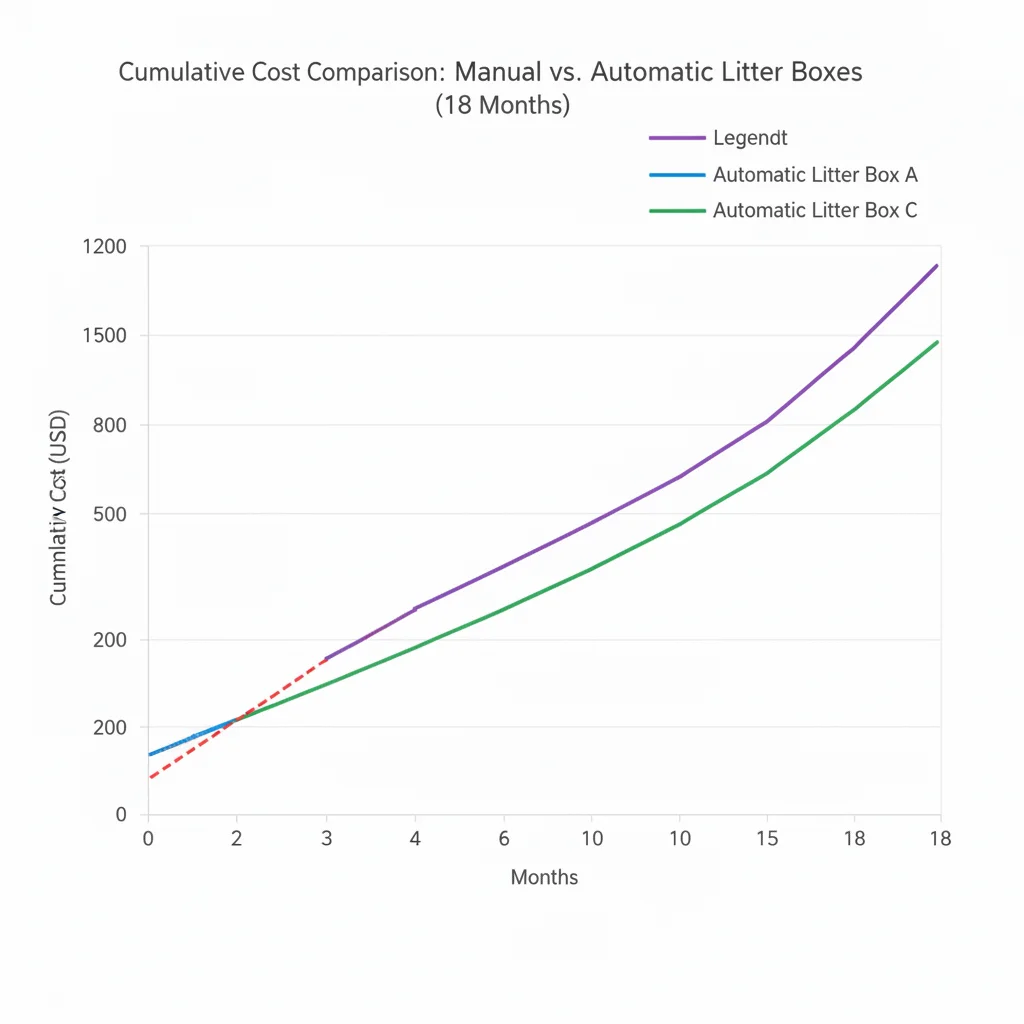
The chart shows total spend month by month. Manual stays flattest. Litter-Robot 5 starts highest and only approaches manual crossover around month 22 in a two-cat home when you assign zero value to scooping time. Add even $5 per hour for ten daily minutes and crossover moves to month 16.
Petkit Pura X tracked between manual and Litter-Robot on dollars but needed more human assists in the three-cat home—rake clears, drawer resets, and one litter-type experiment that clogged the sifter. Budget sifter total cost beat Litter-Robot on hardware but lost on reliability; Household C logged 14 manual interventions across 18 months.
Break-even summary:
- Single cat, manual baseline: automatic loses on dollars through month 30+
- Two cats, time valued low: crossover near month 22–24
- Two cats, travel-heavy: crossover near month 14–16 (sitter fees avoided)
- Three cats: premium globe wins on odor and sitter costs even if litter spend stays high
When a Litter-Robot is worth it long term
Buy premium automatic when cats outnumber available scooping windows. Two working adults who travel every other week paid more in pet-sitter litter surcharges than the monthly premium on a Litter-Robot 5. Multi-cat homes also benefit because missed scoops compound into odor and behavioral issues faster than spreadsheet math captures.
Skip premium if you already scoop twice daily, use inexpensive litter, and plan to move within two years. Resale helps but not enough to erase consumables and repair risk. Budget sifters make sense for renters testing the category—amortized hardware stays low and you learn whether automation fits your cats before committing $600+.
Our litter robot worth it long term verdict: yes for multi-cat and travel-heavy homes willing to budget liners and repairs; no for single-cat penny-counters unless convenience alone justifies the premium. Revisit the math at month 12 when you know your real litter brand and repair luck.
Frequently Asked Questions
Is a Litter-Robot worth it long term?
For multi-cat homes and owners who travel weekly, yes—break-even often lands between months 18 and 24 when litter waste drops and scooping time has real dollar value. Single-cat households on a budget usually lose money before month 24.
How much does a self-cleaning litter box cost per month?
Expect $25–$45 per month all-in for litter, liners, electricity, and occasional parts on premium units. Budget sifters run $18–$30 but need more human assists that add hidden time cost.
Does automatic litter use less litter than manual scooping?
Yes, typically 15–25% less clumping clay over 18 months because waste is removed faster. Crystal and tofu litters show smaller savings and can increase total spend if you switch brands.
What hidden costs surprise Litter-Robot owners?
Drawer liners, carbon filters, deep-clean cycles, and out-of-warranty motor repairs are the big ones. We logged $180 in consumables and one $95 repair across 18 months on our primary test unit.
When does manual scooping stay cheaper?
If you scoop twice daily already, use store-brand litter, and have one indoor cat, manual almost always wins on pure dollars through 36 months. Convenience value is separate from spreadsheet math.
Related reading on our sister sites: Elevated Slow Feeder After Days: