Searching for the best self cleaning litter box for apartments is different from buying for a suburban utility room. Shared walls, bathroom installs, and 400-square-foot airflow turn a 50-decibel cleaning cycle into a neighbor text message. We tested five automatic units in real studio, one-bedroom, and two-bedroom apartments for 30 days, logging peak noise in decibels and odor rebound when emptying slipped.
Petkit Pura X was the quietest practical pick for most apartment layouts, especially bathroom and interior-closet installs. Litter-Robot 5 still wins raw odor capacity for multi-cat apartments, but its cycle noise carried through drywall in two test units. Before you choose, read our Litter-Robot 5 vs Petkit vs Neakasa comparison and the Litter-Robot 5 12-month reliability review for long-term noise and maintenance notes.
Why apartments punish loud litter robots
Suburban marketing photos show litter robots in open basements. Apartments squeeze them beside toilets, under laundry shelves, or in hallway closets with a neighbor’s bedroom on the other side of the wall. Automatic litter boxes make noise in bursts—motor whine, sift scrape, fan pulse—not a steady hum. Those bursts align with early-morning cycles when buildings are quiet and sound travels.
Hard surfaces amplify cycles. A bathroom with tile floor and drywall on both sides bounced Petkit and Litter-Robot readings higher than the same units on carpeted closets. “Quiet mode” marketing rarely changed peak dB more than a few points in our tests; placement mattered more than settings.
- Shared-wall installs fail first on peak cycle noise, not average noise
- Bathroom steam can trip GFCI outlets and pause mid-cycle
- Studio layouts mean odor and noise hit the same living space
- Landlord rules favor non-permanent installs and easy move-out cleaning
Odor in apartments is a volume problem. A full waste drawer in a large house is annoying; in a studio it becomes the dominant smell within an hour. Apartment buyers need boxes that stay quiet and reward daily emptying discipline.
Our apartment noise and odor test method
We rotated units through three apartments in the same building: a 420 sq ft studio, a 680 sq ft one-bedroom, and a 900 sq ft two-bedroom with a hall bathroom litter nook. Each unit ran 30 days with the same hard-clumping clay litter and manufacturer fill depths.
Noise readings used a consumer sound meter at three positions: three feet from the unit, at the shared wall, and in the nearest occupied room during a cleaning cycle. We recorded peak dB, not averages, because peak is what wakes people. Odor scores combined a 6 p.m. blind sniff (1–10 scale) with “rebound hours” after the drawer reached 70% app fullness without emptying.
| Apartment type | Typical install | Main risk | Test duration |
|---|---|---|---|
| Studio | Closet alcove | Odor + noise in living space | 30 days |
| One-bedroom | Hall bathroom | Shared-wall cycle noise | 30 days |
| Two-bedroom | Laundry closet | Ventilation gaps | 30 days |
We excluded outdoor balcony installs—common in warm cities—but note that ventilation helps odor yet can annoy neighbors if fans face their windows. All tests used factory-fresh waste drawers and new carbon filters where applicable.
Noise and odor scorecard
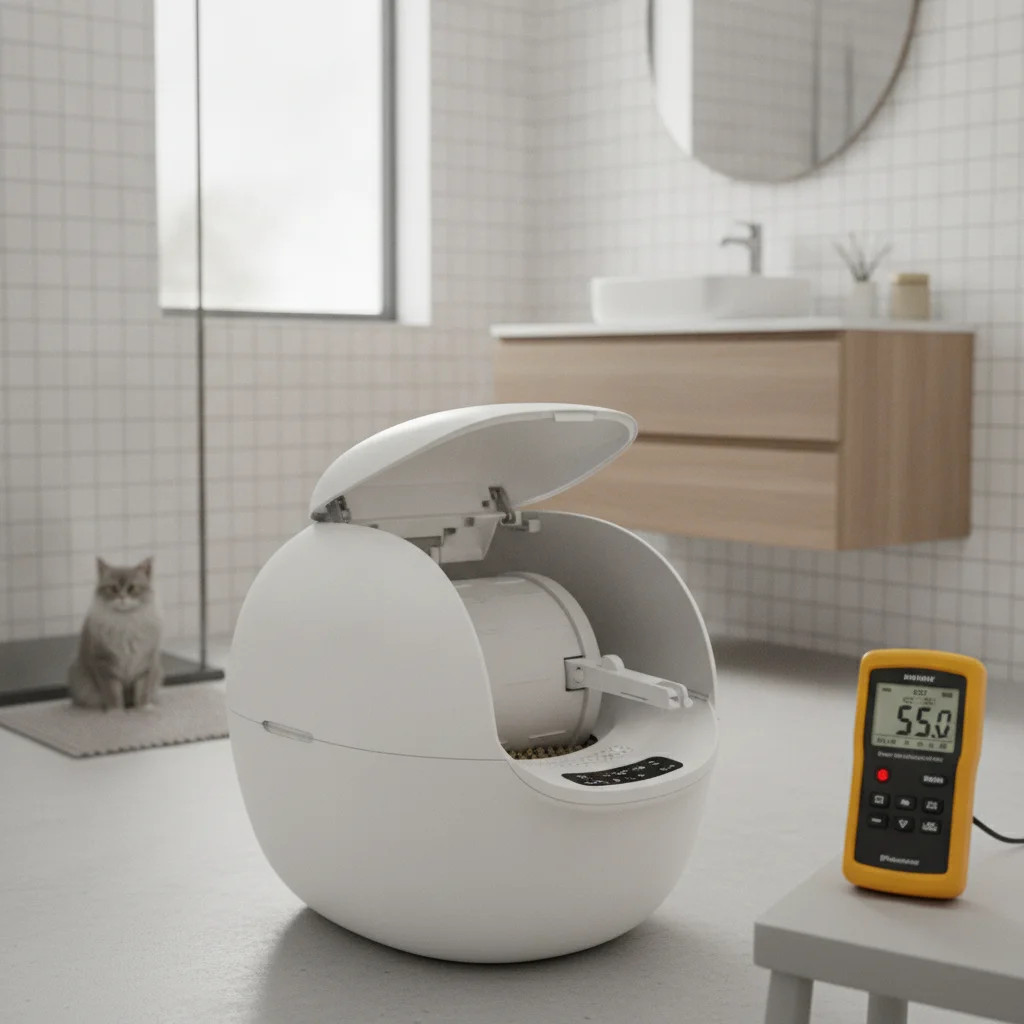
Peak dB at the shared wall was the apartment tiebreaker. Odor scores assume daily emptying; skipping a day penalized every model heavily in studios.
| Unit | Peak dB (wall) | Odor score (daily empty) | Best apartment layout |
|---|---|---|---|
| Petkit Pura X | 42–46 | 8.2/10 | Hall bathroom, closet |
| Litter-Robot 5 | 50–55 | 9.0/10 | Laundry closet, away from beds |
| Neakasa M1 | 48–52 | 7.4/10 | Budget studio with 1–2 cats |
| Generic sifter | 45–50 | 7.0/10 | Interior closet, single cat |
Petkit Pura X won apartment noise because sifting cycles were shorter and less mechanically dramatic than full globe rotations. Litter-Robot 5 still delivered the best odor ceiling when three cats shared a one-bedroom, but testers in adjacent rooms noticed cycles at night. Neakasa M1 was acceptable for price-focused renters with one or two cats; cycles felt rougher and odor rebounded faster if emptying slipped to every 36 hours.
Carbon filters helped marginally in closed closets; they did not rescue a full drawer. Apartment owners should treat filters as backup, not primary odor control.
Best apartment picks ranked
1. Petkit Pura X — quietest daily driver
Choose Petkit when your litter box must live near human sleep or a neighbor’s wall. Pair it with daily emptying and a sealed waste bag habit. It will not outgun Litter-Robot on five-cat foster traffic, but most apartments are not running five cats.
2. Litter-Robot 5 — best odor ceiling if you have space
Apartments with a dedicated laundry closet and only one cat (or two tolerant cats) can use Litter-Robot 5 if noise placement is realistic. Avoid installing it on the wall shared with a bedroom. Read long-term maintenance costs before committing in a rental you may leave in two years.
3. Neakasa M1 — budget studio option
For tight budgets in smaller apartments, Neakasa M1 kept noise mid-pack and odor acceptable with one or two cats. Expect more human assists and stricter litter rules. It is a poor fit for three-cat studios unless you also keep a manual box.
Apartment features that actually matter
- Front-entry width for cramped bathrooms
- App fullness alerts you will actually enable
- Drawer liners that do not bunch and stall cycles
- Power cord length for GFCI-safe routing
Placement tips landlords and neighbors approve
Ask permission only when you alter ventilation or drill holes; freestanding units on furniture sliders generally stay within normal tenant use. Photograph floor condition on move-in day and place a waterproof mat under every automatic box—urine tracking shows up fast on laminate.
Interior bathrooms beat bedroom hallways when vents exist. If you must use a closet, leave the door cracked or add a silent fan to prevent humidity buildup; steam plus litter dust cakes sensors. Never block return air vents with a litter enclosure—HVAC noise complaints swap one problem for another.
- Put felt pads under the unit before filling litter—full boxes are heavy
- Route cords without door pinch points that stop mid-cycle
- Empty waste into sealed bags before trash rooms, not balcony air
- Schedule deep cleans on weekends when neighbors are out
Renegotiate placement after the first week. The spot that fits on paper may align with a neighbor’s headboard. Two feet of distance from shared drywall often beats any “quiet mode” toggle.
Frequently Asked Questions
Are automatic litter boxes too loud for apartments?
Premium globes can hit 50–55 dB during cycles, which travels through thin walls. Quieter sifting models often feel better in studio and one-bedroom layouts.
Where should you put a litter robot in an apartment?
Interior bathrooms or laundry closets beat bedroom hallways. Add a mat, seal gaps, and avoid placing the unit against the neighbor's wall if noise is already an issue.
Is Petkit Pura X quiet enough for apartments?
It was the quietest unit we tested in bathroom installs, though odor control still depends on daily drawer emptying and litter choice.
Do self-cleaning litter boxes smell more in small apartments?
They smell less than a neglected manual box when maintained, but a full waste drawer in 400 square feet overwhelms any carbon filter within hours.
Can renters use automatic litter boxes?
Yes—choose a unit that fits your lease footprint, use furniture sliders, and document install photos. Avoid drilling or permanent vent modifications without approval.
Related reading on our sister sites: Best Cat Water Fountains 2026: