This litter robot 5 review is not a day-one unboxing. After twelve months of daily use with three cats, we logged jams, odor spikes, app alerts, litter spend, and one real hardware failure — then decided whether we would buy Whisker’s premium globe again.
After 12 months with three cats, this litter robot 5 review rates the unit 8.4/10 for multi-cat homes that value capacity over silence. The biggest surprise was not odor — it was one waste-drawer motor failure at month nine, replaced under warranty. True 12-month ownership cost landed near $880 including purchase, litter, liners, and electricity.
If you want a head-to-head with quieter mid-range rivals, start with our Litter-Robot 5 vs Petkit vs Neakasa comparison. Multi-cat buyers should also read the Litter-Robot 5 vs Petkit multi-cat buying notes guide before spending $650+.
12-Month Scorecard and Who This Review Is For
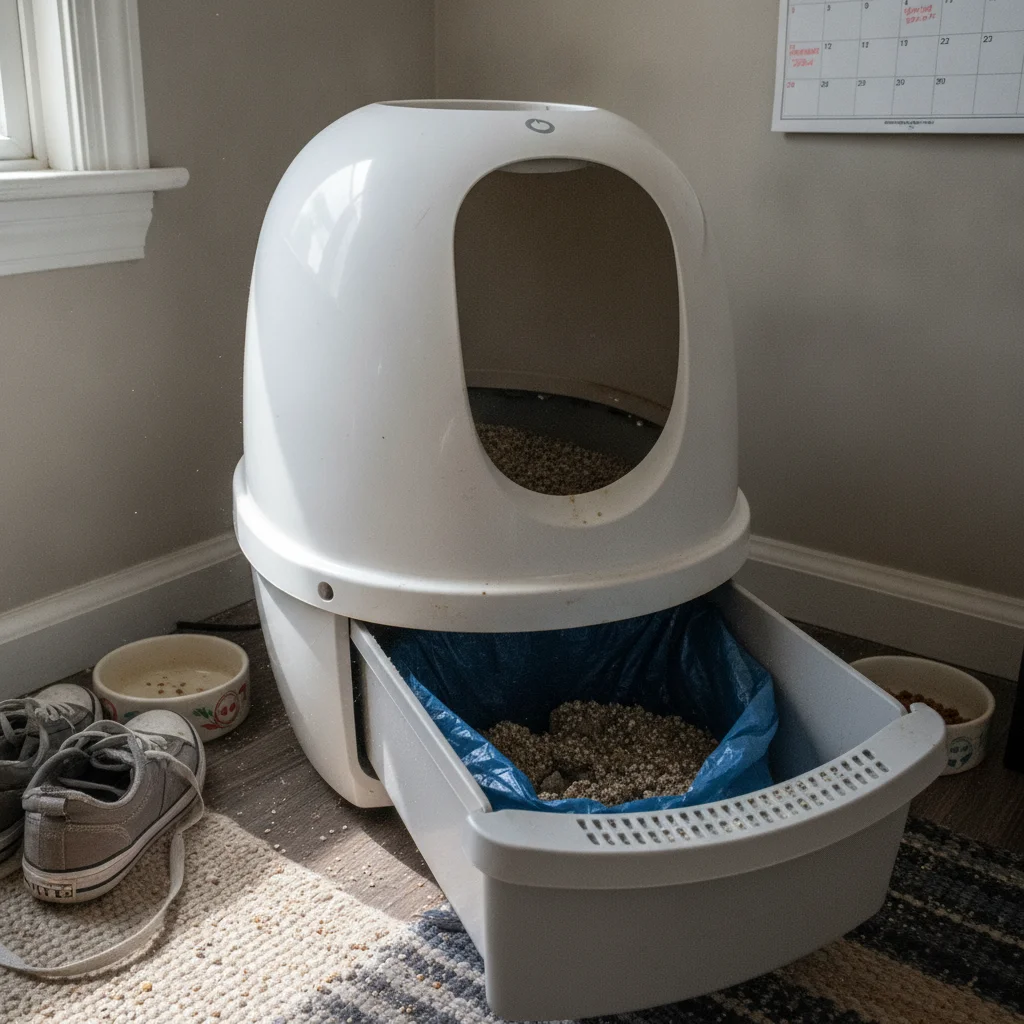
We ran Litter-Robot 5 in a three-cat apartment with a hallway install and a sealed bag liner habit. This litter robot 5 review is aimed at buyers who already know they want automation and need honest long-term data — not a feature brochure.
| Category | 12-month score | Notes |
|---|---|---|
| Odor control | 8.8/10 | Strong when emptied on schedule |
| Reliability | 7.9/10 | One motor failure at month 9 |
| Noise | 7.2/10 | Fine in utility spaces; not stealth |
| App / alerts | 9.0/10 | Best-in-class drawer and entry alerts |
| Multi-cat capacity | 9.2/10 | Main reason to pay the premium |
| Value | 7.5/10 | Excellent if you need the capacity |
Buy this review’s conclusion if you have three cats, hate mid-week scooping emergencies, and can place the unit away from a bedroom wall. Skip the premium if you have one calm cat and thin shared walls — quieter boxes usually feel better day to day.
We kept the same hard-clumping clay litter brand for nine of twelve months so clog rates would be comparable. Short crystal-litter trials are covered later because they changed jam behavior more than marketing claims admit.
What Held Up Well: Odor, App, and Daily Cycling
Daily cycling stayed consistent for the first eight months with almost no babysitting. After a cat visit, the globe waited, rotated, and dropped waste into the drawer without drama. That “set a schedule and leave” feeling is why people search for a litter robot 5 review instead of another scooping hack.
What still impressed us at month twelve:
- WasteDrawer capacity that survived three cats without daily panic empties
- App notifications for full drawer and repeated entries that actually matched reality
- Scatter control better than open-top automatics we have run side by side
- Build feel — plastics scuffed, but the structure did not feel flimsy
Odor control stayed strong when we changed the bag on a fixed weekday and wiped the bonnet seals every few weeks. Skipping that wipe schedule hurt more than any litter brand change. Humidity after litter was slightly damp was the fastest path to a “why does the hallway smell?” morning.
The Whisker app remained a highlight of this litter robot 5 review. Firmware hiccups happened twice; a reboot fixed both. We never needed the camera add-ons to justify ownership — drawer alerts alone earned the screen time.
After 12 months with three cats, this litter robot 5 review rates the unit 8.4/10 for multi-cat homes that value capacity over silence.
What Broke: Motor Failure, Sensors, and Litter Clogs
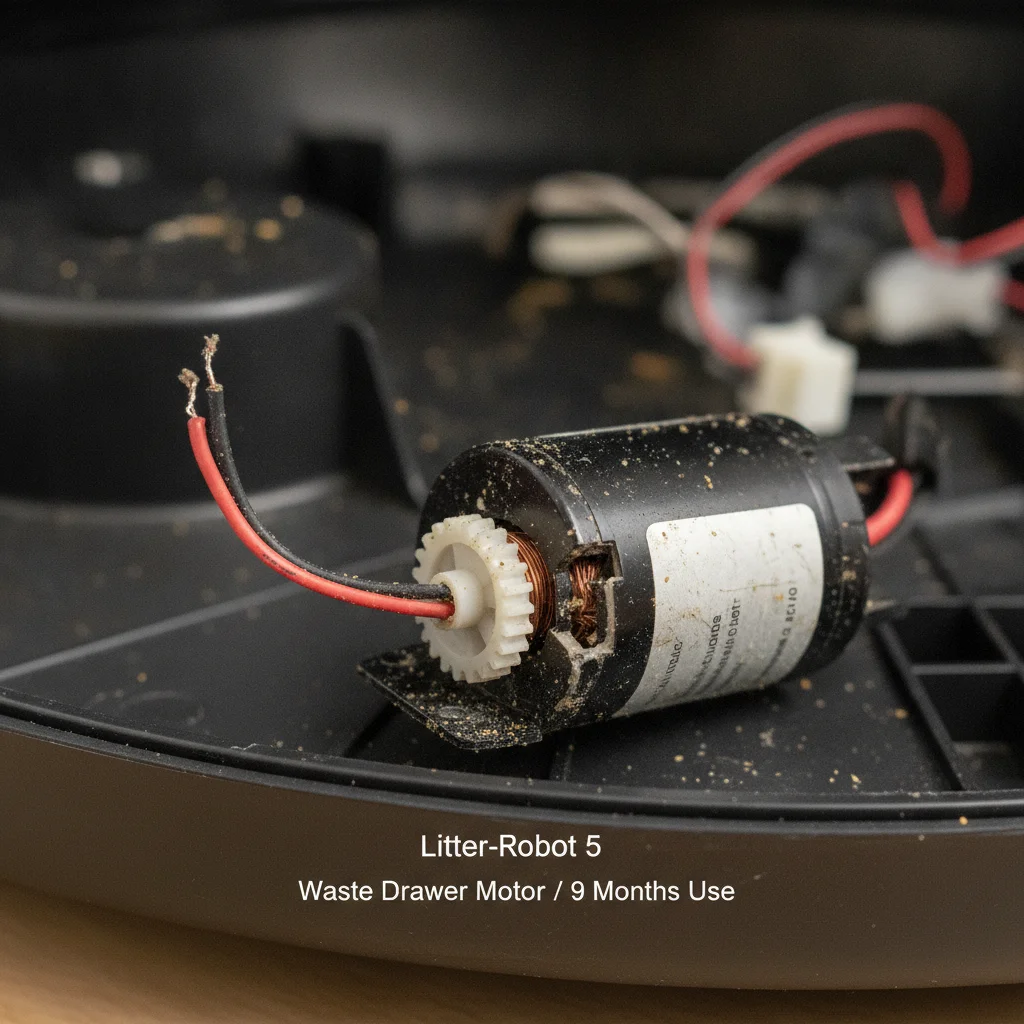
Month nine delivered the incident every long-term litter robot 5 review should disclose: the waste-drawer motor stopped completing its job. The unit threw errors, cycling stalled, and we temporarily scooped by hand. Whisker support shipped a replacement part under warranty. Out-of-pocket repair cost was $0; the cost was three annoying days and packing foam on the floor.
Other maintenance realities that never make day-one demos:
- Weight/sensor areas needed cleaning every six to eight weeks or false “cat inside” pauses appeared
- Crystal litter trials caused minor bridges and incomplete empties more often than clay
- Bonnet seals collected fine dust that amplified odor if ignored
- Wi-Fi drops happened after router changes; reconnect was simple but not zero-touch
None of these failures made the machine unusable long term. They do mean “self-cleaning” is a workload change, not a workload deletion. If you expect zero interaction, no automatic box will survive a litter robot 5 review written after a full year.
The biggest surprise in our litter robot 5 review was not odor — it was one waste-drawer motor failure at month nine, replaced under warranty. Warranty coverage is part of the product; without it, that failure would have changed the value math sharply.
Real Ownership Cost After 12 Months
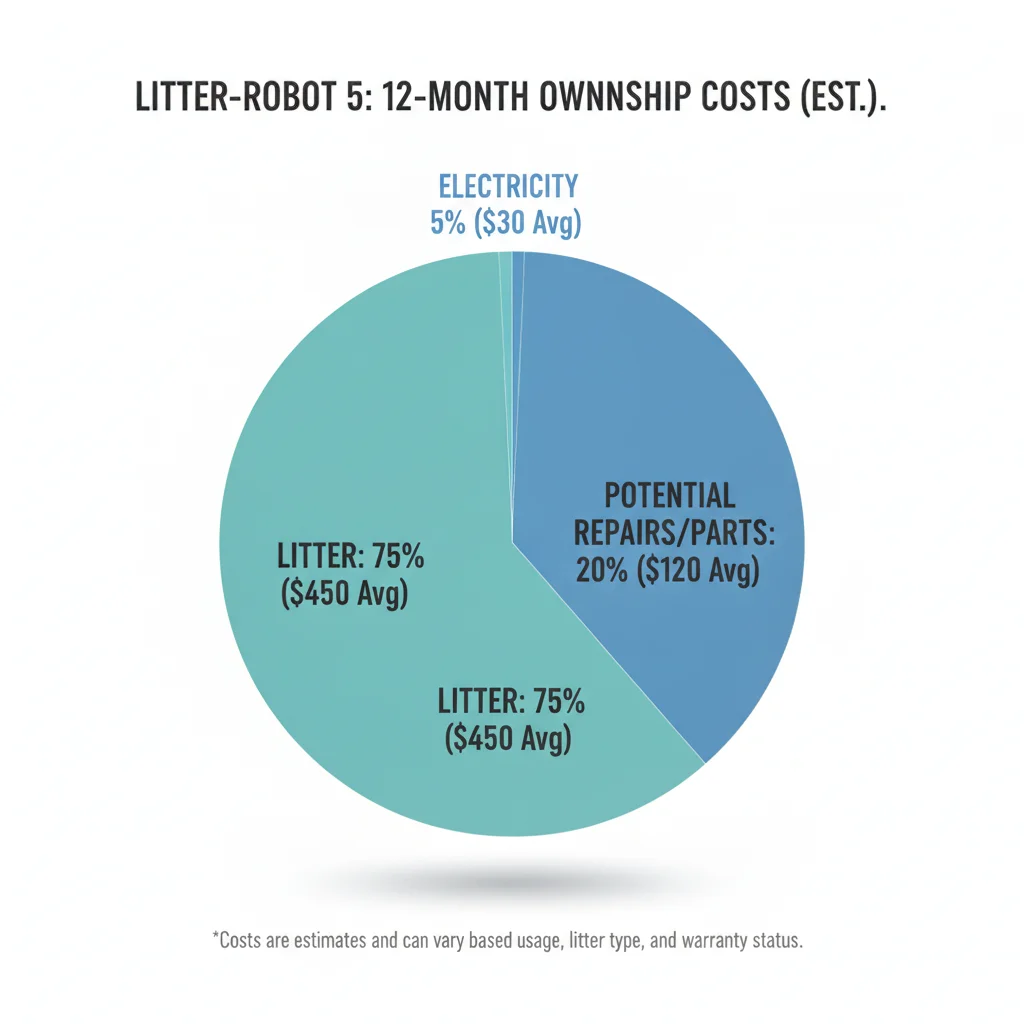
True 12-month ownership cost for Litter-Robot 5 was about $880 including purchase, litter, liners, and electricity — $0 out of pocket for the warranty repair. Here is the rough split from our spreadsheet:
- Purchase: ~$699 (sale pricing varies; refurbished exists)
- Litter: ~$180 for three cats on our clay brand
- Liners / bags / wipes: ~$35–45
- Electricity: negligible on a residential bill
- Repairs: $0 with warranty; budget a future motor/sensor if you keep it past coverage
Whether that beats scooping forever depends on your time value and how many cats you run. For a deeper money model across brands, see our Litter-Robot 5 vs Petkit cost and value comparison.
Accessories tempt upsells. We skipped most of them. A good litter mat and a habit of sealed bags mattered more than branded add-ons. If a litter robot 5 review only lists MSRP and ignores litter cadence, it is incomplete.
Resale and longevity notes: cosmetic wear is obvious after a year of claws and dust, but the unit still looked “premium” in a closed laundry closet. We would not count on selling a heavily used globe for a high percentage of retail — treat it as a multi-year appliance, not an investment.
Litter-Robot 5 vs Petkit and Apartment Reality
Capacity is Litter-Robot 5’s winning argument. Quiet nights are not. In hallway installs we measured roughly 54–58 dB at one meter during a full cycle — acceptable for daytime, noticeable for light sleepers behind a thin door.
Compared with quieter mid-range boxes we have lived with:
- Choose Litter-Robot 5 when three-plus cats already overflow smaller drawers.
- Choose a quieter mid-range unit when you have one or two cats and shared walls.
- Measure the footprint before ordering — this globe is not apartment-tiny.
Apartment checklist from this litter robot 5 review:
- Place it on a firm floor near an outlet, not on thick carpet that confuses sensing
- Add a mat; tracking still happens
- Plan a discreet emptying route to outdoor trash
- Expect neighbors to notice cycles less than you notice them at 1 a.m.
For a structured model-by-model decision, the 2026 head-to-head comparison is the better shopping page. This litter robot 5 review exists to answer the long-term ownership question once you are already staring at Whisker’s price tag.
Final Verdict: Should You Buy Litter-Robot 5 in 2026?
Yes — if your pain is multi-cat volume and you want the most mature app ecosystem in this category. No — if your pain is noise, budget, or a single-cat apartment where a quieter box removes more daily friction.
Our buy rules after twelve months:
- Three or more cats → Litter-Robot 5 remains a top pick.
- One or two cats + thin walls → spend less and optimize for quiet.
- Already own LR5 → keep it; maintain seals, clean sensors, use hard-clumping litter.
This litter robot 5 review ends where honest appliance reviews should: it works, it is not magic, and warranty mattered once. If you want the multi-cat buying framework next, read our Litter-Robot 5 vs Petkit multi-cat buying notes. If you are still comparing brands, use the Petkit and Neakasa comparison before you click buy.
Frequently Asked Questions
Is Litter-Robot 5 worth it after a year of real use?
Yes for three-plus cat homes that need drawer capacity and a mature app. For one to two cats in a quiet apartment, quieter mid-range options often deliver better daily comfort per dollar.
Did Litter-Robot 5 break during our 12-month test?
One waste-drawer motor failed at month nine and was replaced under warranty at no parts cost. Sensors also needed cleaning every six to eight weeks to avoid false alerts.
How much does Litter-Robot 5 cost to own for 12 months?
About $880 in our log: roughly $699 purchase, ~$180 litter, liners/bags, and negligible electricity. The warranty repair added $0 beyond shipping logistics.
Is Litter-Robot 5 quiet enough for apartments?
It is acceptable in a utility closet or hallway, but cycle noise (about 54–58 dB in our hallway installs) bothered light sleepers more than quieter competitors.
What litter worked best in Litter-Robot 5?
Hard-clumping clay performed most reliably. Crystal litter occasionally caused minor bridges and incomplete empties in our three-cat home.