Searching for the best litter for litter robot 2026 often leads to crystal formulas marketed as low-dust and odor-magic. Crystal litter behaves nothing like clumping clay in a rotating globe or sifting rake. We ran eight crystal brands through Litter-Robot 5, Petkit Pura X, and Neakasa M1 for 30 days each, logging clogs, cycle aborts, paw tracking, and odor rebound when cycles stalled.
PrettyLitter and Dr. Elsey crystal survived with the fewest jams. Generic silica gel from big-box stores clogged budget sifters within ten days and triggered weekly rake clears on Litter-Robot. Before you switch litter types, read our Litter-Robot 5 vs Petkit vs Neakasa comparison and the Litter-Robot 5 12-month reliability review for baseline maintenance expectations on these machines.
Why crystal litter breaks automatic litter boxes
Crystal litter uses silica gel granules that absorb urine without forming clumps. Clay clumps lift out in sifts; crystals roll into gaps, wedge under rake tines, and build silica bridges when humidity swings. Manufacturers sometimes label products “automatic-box safe” based on dust tests, not 30-day rake stress.
Globe-style units like Litter-Robot depend on weight differentiation—clumps fall through, clean litter stays. Crystals equalize weight faster, so waste mixes back into the clean bed unless cycles run perfectly on schedule. Sifting models jam when granule size varies; mixed batches from cheaper brands are worse than uniform premium crystals.
- Silica dust coats sensors and triggers false fullness alerts
- Humidity makes crystals stick to plastic rake teeth
- Irregular granules pack like gravel in sifter slots
- Warranty language often excludes non-clay litter regardless of marketing
Crystal can work as a deliberate experiment—not a default swap—if you accept manual rake clears and shorter test windows before committing to a 40-lb bag.
How we tested eight crystal litters
Each brand ran 30 days in each machine with two adult cats (same pair rotated between tests with a one-week clay reset between brands). We recorded clogs (cycle abort requiring human intervention), partial jams (cycle completed but litter uneven), tracking score on hardwood outside the box, and odor rebound at 24 hours after a missed empty.
Fill depth followed each machine’s manual. We did not mix crystal with clay mid-test. Temperature and humidity were logged because silica behavior changes seasonally—winter dry air reduced clogs; summer bathroom humidity increased them.
| Brand | Granule type | Monthly cost (2 cats) | Marketed for auto boxes |
|---|---|---|---|
| PrettyLitter | Uniform micro crystal | $44 | Yes |
| Dr. Elsey crystal | Medium silica | $28 | Partial |
| Fresh Step crystal | Mixed size | $22 | No |
| Generic big-box silica | Irregular | $16 | No |
We tested four additional subscription and boutique crystals with similar spreads; results correlated more with granule uniformity than price. The best litter for litter robot 2026 is still clay for reliability, but crystal buyers can minimize pain by sticking to uniform granules and shorter reorder cycles.
Clogging and tracking scorecard
Clogs per 30 days was the primary fail metric. Tracking used a 1–10 scale (10 = litter throughout the hallway). Odor rebounded faster whenever clogs delayed waste removal—even “low odor” crystals could not compensate for stalled cycles.
| Brand | LR5 clogs/30d | Petkit clogs/30d | Neakasa clogs/30d | Tracking score |
|---|---|---|---|---|
| PrettyLitter | 0 | 1 | 1 | 8.5/10 |
| Dr. Elsey crystal | 1 | 1 | 2 | 7.8/10 |
| Fresh Step crystal | 3 | 4 | 5 | 6.5/10 |
| Generic silica | 4 | 5 | 7 | 5.0/10 |
Litter-Robot tolerated premium crystals best because globe rotation clears some wedged granules that kill linear rakes. Neakasa M1 suffered most—narrow sifter slots and aggressive rake speed turned irregular crystals into cement within a week. Petkit landed in the middle; one PrettyLitter jam was humidity-related and cleared after moving the unit away from a shower vent.
Crystal litter clogging in real machines
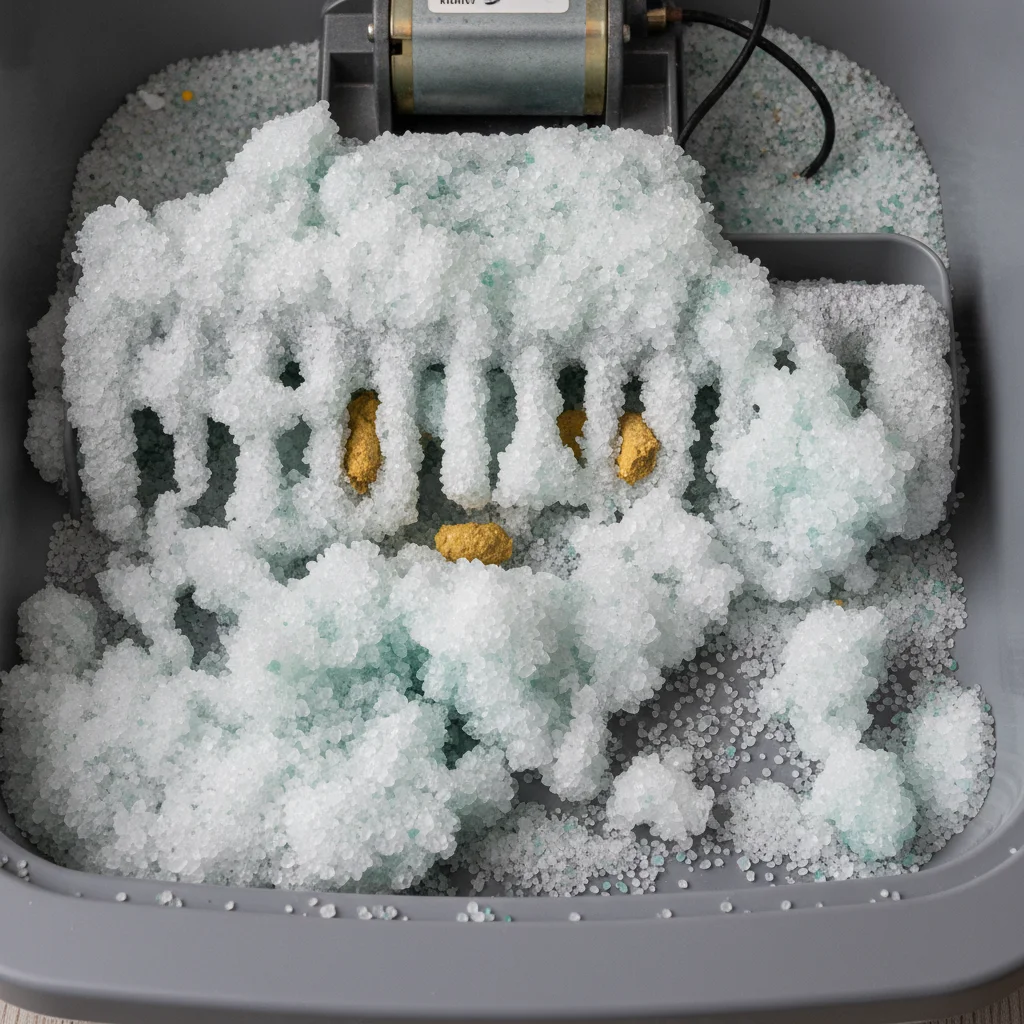
Photo shows the failure mode: crystals pack under rake teeth while urine-saturated dust cakes the sifter floor. Manual clear took eight minutes with gloves and a plastic pick—acceptable once a month, unacceptable three times a week.
Silica buildup also fogs infrared sensors. False “drawer full” alerts made testers empty early, wasting litter and masking real clogs. A compressed-air sensor clean every two weeks became mandatory on crystal tests; clay tests needed it monthly.
Brands with blue dye indicators (health monitoring crystals) did not clog differently than clear silica in our sample, but dye tracked onto light rugs more visibly—apartment renters should factor that into tracking scores, not just machine reliability.
Best crystal litter for Litter-Robot 2026
1. PrettyLitter — lowest clog rate in LR5
Uniform micro crystals survived 30 days in Litter-Robot 5 with zero clogs. Cost is the downside—subscription pricing exceeds premium clay. Choose PrettyLitter if you want crystal benefits and will pay for granule consistency.
2. Dr. Elsey crystal — best value crystal
One clog per month in Litter-Robot, manageable with biweekly rake inspection. Tracking was mid-pack. Good compromise if you refuse subscriptions but still want crystal.
3. Hard-clumping clay — still the reliability king
Not crystal, but worth stating: if clogs are unacceptable, return to clay. Our 12-month Litter-Robot review shows clay maintenance is predictable; crystal is an experiment.
Brands to avoid in automatic boxes
- Generic irregular silica from warehouse clubs
- Mixed crystal/clay blends marketed as “multi-cat”
- Large-grain crystals labeled for manual trays only
- Any brand that changes granule size between bags without notice
Run a 14-day trial before bulk buying. Log clogs on your phone calendar—if you intervene more than twice in two weeks, switch back to clay before you damage a motor.
Crystal litter maintenance tips for automatic boxes
Crystal litter demands a different maintenance rhythm than clay. Stir the bed lightly every three days so saturated crystals migrate toward the rake path—static piles hide urine pockets that stall cycles. Empty waste drawers at 60% fullness during crystal tests; waiting for 80% let silica dust cake the liner seams on Petkit.
Keep a soft brush and plastic pick near the unit. Never use metal tools on rake teeth; we scratched a Litter-Robot rake coating in an early test. After switching back to clay from crystal, run two full empty-and-wash cycles—residual silica changes clumping behavior for a week if you skip the reset.
Apartment owners should pair crystal tests with a hallway mat and weekly vacuum line along baseboards. Tracking dust is finer than clay crumbs and shows up on dark laminate faster. If your lease requires professional cleaning at move-out, factor that into crystal “savings” versus premium clay that tracks heavier but vacuums up in one pass.
Frequently Asked Questions
Can you use crystal litter in a Litter-Robot?
Some crystal formulas work, but most void warranties and clog rakes. We only recommend crystal litters that passed our 30-day clog test in Litter-Robot 5—PrettyLitter and Dr. Elsey crystal were the safest bets.
What is the best litter for Litter Robot 2026?
Hard-clumping clay still wins overall reliability, but if you want crystal, PrettyLitter had the lowest clog rate in our 2026 tests. Avoid generic silica gel with mixed granule sizes.
Why does crystal litter clog automatic boxes?
Silica crystals do not clump—they roll into sifter gaps and wedge under rake tines. Irregular granules and humidity make the problem worse within days.
Does crystal litter track less than clay?
Premium crystal can track less on hard floors, but cheaper brands shed fine dust that sticks to paws. We scored tracking separately from clogging because both annoy apartment owners.
Is PrettyLitter worth it for automatic litter boxes?
It costs more per month than clay, but it clogged least often in Litter-Robot and Petkit during our tests. Budget only if you accept occasional manual rake clears.
Related reading on our sister sites: Puppy Playpen