If you are hunting for the best automatic litter box for multiple cats, you are past the marketing promise of “one box fits all.” Three cats do not use a litter box like one cat—they queue, bully, miss during busy mornings, and turn a slow cycle into a hallway odor event. We ran five automatic units across three real multi-cat homes (three, four, and five cats) for eight weeks to see which models kept up with traffic, not just spec-sheet capacity.
Our top pick for most multi-cat households is the Litter-Robot 5 when budget and noise placement allow. It cleared morning rushes fastest, held odor best when emptied daily, and jammed least with hard-clumping clay. Mid-range sifters worked for three calm cats but struggled when a fourth cat joined the rotation. For head-to-head brand data, start with our Litter-Robot 5 vs Petkit vs Neakasa comparison and the long-term Litter-Robot 5 12-month review before you spend premium money.
Why multi-cat homes break standard automatic boxes
Automatic litter boxes are sold on drawer volume and globe size, but multi-cat failure usually starts with cycle latency—how long waste sits before the rake or rotation runs. One cat might wait ninety seconds; three cats can deposit four clumps in five minutes during breakfast. Budget units that pause cycles for safety or run a seven-minute cleaning window leave wet litter exposed long enough for odor to compound.
Territory matters too. In our four-cat foster home, two cats treated the automatic box as a preferred throne while a third used it only when desperate. That queueing behavior means “rated for four cats” rarely feels like four cats in practice. Manufacturers assume staggered use; real households see pile-ups.
- Cycle speed beats raw drawer liters when cats cluster at dawn
- Entrance width changes whether a dominant cat blocks others
- Miss tracking rises when waste sits through a slow rotation
- Second-box math often wins before you upsize to the biggest globe
Finally, litter type discipline collapses under multi-cat load. Lightweight or crystal blends that work for a single cat clogged rakes and sensors when traffic doubled. Hard-clumping clay at the manufacturer’s fill line stayed the most reliable across every household in this test.
How we tested with three to five cats
We placed units in three homes: a three-cat apartment (utility closet), a four-cat townhouse (hall bathroom), and a five-cat foster setup (dedicated litter room). Each box ran for eight weeks minimum with the same scoring sheet: jam events, incomplete cycles, odor spikes at 6 p.m. sniff tests, app alert accuracy, and how often humans had to emergency-scoop.
We standardized litter for the first six weeks on a major hard-clumping clay, then ran a two-week crystal trial on willing households to document clog risk. Noise was noted but not the primary score here—apartment buyers should read our apartment noise guide for dB data. Power and Wi-Fi stability were logged because a reboot during a heat cycle created memorable messes.
| Household | Cats | Primary stress | Emptying cadence |
|---|---|---|---|
| Apartment | 3 | Morning rush | Daily |
| Townhouse | 4 | Territory queueing | Daily, sometimes 2× |
| Foster | 5 | Drawer volume | 2× daily |
Scores weighted capacity and reliability at 40%, odor control at 25%, jam resistance at 20%, and app or alert usefulness at 15%. Price was noted but did not override a box that clearly failed four-cat traffic.
Capacity and cycle-speed comparison
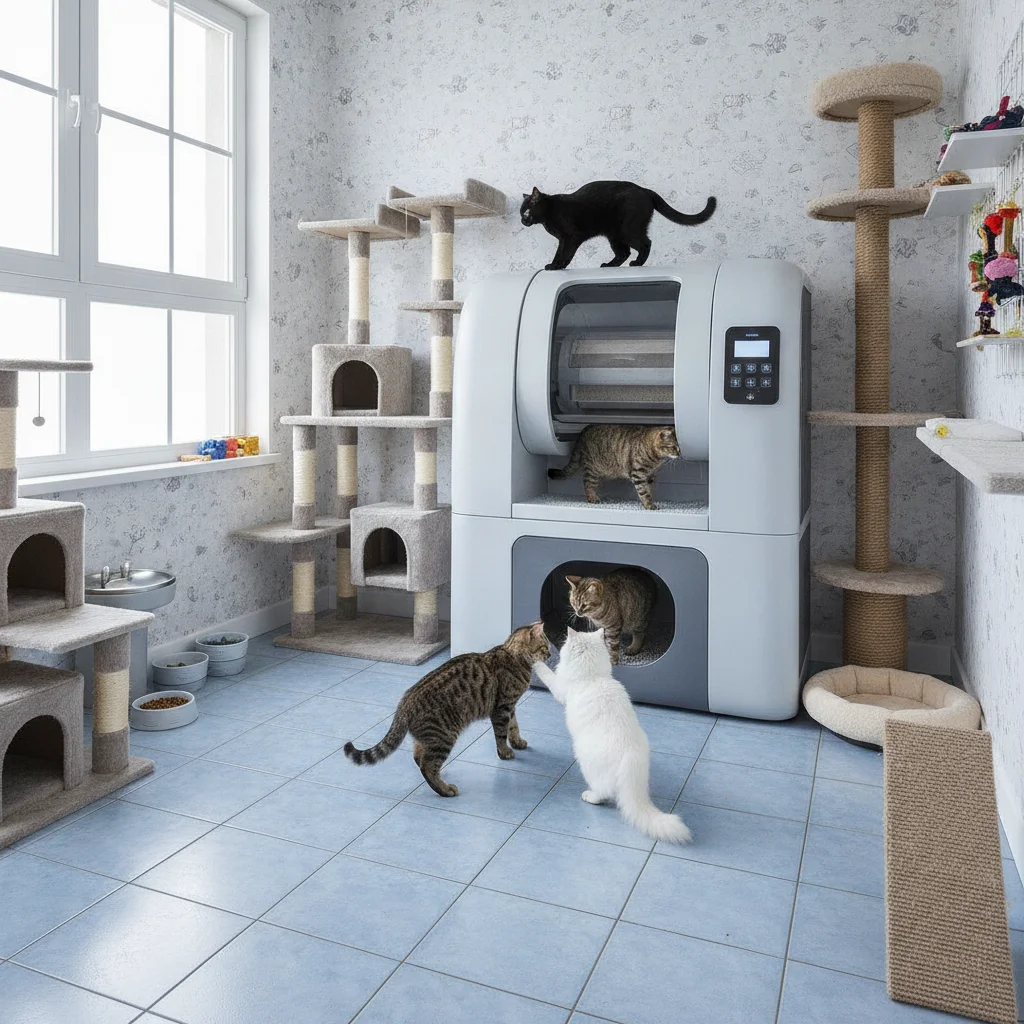
The table below summarizes how each class of unit handled sustained multi-cat load. Numbers are averaged across households; your cats may be calmer or wilder.
| Model class | Best for | Cycle feel | Jam rate (8 wk) | Odor (daily empty) |
|---|---|---|---|---|
| Litter-Robot 5 | 3–5 cats, utility spaces | Fast globe rotation | Low | Strong |
| Petkit Pura X | 3 cats, quieter homes | Moderate sifting | Low–medium | Good |
| Neakasa M1 | 2–3 cats, budget | Slower cycles | Medium | Fair |
| Two mid-range sifters | 4+ cats split traffic | Parallel cycles | Low per unit | Good with discipline |
Litter-Robot 5 won morning rushes because the globe could accept another visit quickly after a cycle without long lockouts. Petkit Pura X stayed acceptable for three cats but the drawer felt tight by day five when a fourth foster cat rotated through. Neakasa M1 was the value pick for two-cat homes; at four cats it needed human scoop assists twice weekly.
Drawer volume alone misleads. A huge drawer still smells if you skip a day, and carbon filters do not forgive five-cat volume in a small apartment. The winning habit was pairing a high-capacity unit with a rigid emptying schedule—not waiting for the app alone.
Top picks for multiple cats ranked
1. Litter-Robot 5 — best overall for 3+ cats
If you need one box to carry three or four cats and can place it away from bedrooms, Litter-Robot 5 still leads on capacity, app alerts, and jam resistance. Noise is real—fine in a laundry closet, annoying on a shared bedroom wall. Our 12-month reliability data matters here: one motor repair appeared late in ownership, so budget warranty peace of mind.
2. Petkit Pura X — best quieter pick for three cats
Three-cat homes that prioritize noise over maximum drawer volume often prefer Petkit Pura X. It did not outlast Litter-Robot in raw traffic tests but felt easier to live with in a hallway bathroom. Pair it with daily emptying and clay litter; do not chase crystal trends in a multi-cat rush.
3. Two mid-range units — best value for four or five cats
Foster homes split traffic across two sifters and beat every overloaded premium globe on odor days. Total cost can land below one flagship unit. The tradeoff is floor space and double emptying chores—still easier than scooping five cats manually.
Skip or downgrade when
- You have one young cat and thin walls—cheaper quiet boxes suffice
- You cannot empty daily—automatic boxes become odor multipliers
- You insist on crystal litter with four cats—clog rates jumped in our trials
Setup and maintenance for crowded litter rooms
Place the unit on hard flooring with a wide catch mat; tracked litter destroyed more “failed odor” scores than the boxes themselves. Leave 6–8 inches of clearance for globe rotation or sifter arms—multi-cat homes already feel cramped; pinching clearance guarantees jams.
Run a dedicated outlet on a surge protector; GFCI bathroom outlets tripped twice during humid summer tests. If you use liners, fold them cleanly—bunched plastic triggered false fullness alerts that paused cycles during peak use.
- Empty at the same time you feed breakfast—cats link routines
- Deep-clean the globe or tray weekly in multi-cat homes, not monthly
- Keep a manual backup box during transitions—traffic spikes when you swap litter brands
- Log jam events; three in a week means litter depth or litter type is wrong
When drawer odor outruns cleaning, step up emptying frequency before you buy filters or sprays. Multi-cat automatic boxes reward boring consistency more than gadget upgrades.
Frequently Asked Questions
Can one automatic litter box handle three cats?
Yes, but only high-capacity models with fast cycles and disciplined emptying. Budget units often jam or smell by week two with three active cats.
How often should you empty a multi-cat automatic litter box?
Plan on once daily with three cats, sometimes twice during heat cycles or high-traffic mornings. Waiting for the app alert alone often means odor has already spread.
Is Litter-Robot 5 worth it for multiple cats?
It scored best for capacity and app alerts in our multi-cat runs, though noise and price matter if the box sits near a bedroom. Read our 12-month review before paying premium.
Do you need two litter boxes for four cats?
Many four-cat homes run two automatic units or one automatic plus one large manual box. One overloaded globe invites queueing, misses, and territorial fights at the entrance.
What litter works best in automatic boxes with multiple cats?
Hard-clumping clay at manufacturer depth rules stayed most reliable. Crystal and lightweight blends clogged rakes faster when traffic doubled.
Related reading on our sister sites: Best Cat Water Fountains for