Understanding dog bed foam density ILD separates real orthopedic support from marketing stickers on egg-crate foam. We cut open popular beds, measured density where we could, and tracked how quickly each core bottomed out under dogs from 45 to 95 lb over twelve months.
Budget orthopedic beds often use very low-density foam that provides little real support for medium and large dogs. ILD — indentation load deflection — describes firmness, but listings rarely publish numbers you can compare.
For senior-specific picking, start with our orthopedic bed guide for senior dogs. To compare foam types, read our memory foam vs hybrid vs gel breakdown.
What Foam Density and ILD Actually Measure
Foam density (often lb/ft³) describes how much material is in a given volume. Higher density usually means slower collapse — but only if thickness is real.
ILD measures how many pounds it takes to indent foam by 25%. Higher ILD feels firmer. Seniors often need supportive push-back, not marshmallow sink.
Neither number appears on most pet-bed listings. That is why cutaways and return-window trials matter more than hangtags when you research dog bed foam density ILD.
- Density without thickness can still bottom out under heavy dogs
- ILD without density context does not tell the whole story
- Quilted tops add loft but not necessarily support inches
Why Marketing Labels Mislead Dog Bed Shoppers
"Orthopedic" is unregulated on many marketplaces. We found identical egg-crate cores rebranded with different covers and prices. Human-grade memory foam claims appeared on pads under two inches thick.
Red flags when evaluating dog bed foam density ILD:
- No stated support-layer thickness
- Only small breeds in product photos
- Non-removable covers on foam that will absorb accidents
- Return windows shorter than a real sleeping trial
Green flags: stated density class, layer diagrams, weight guidance, and reviews from owners of similar-sized dogs after month six — not day three.
Cutaway Comparison: Budget vs Premium Foam
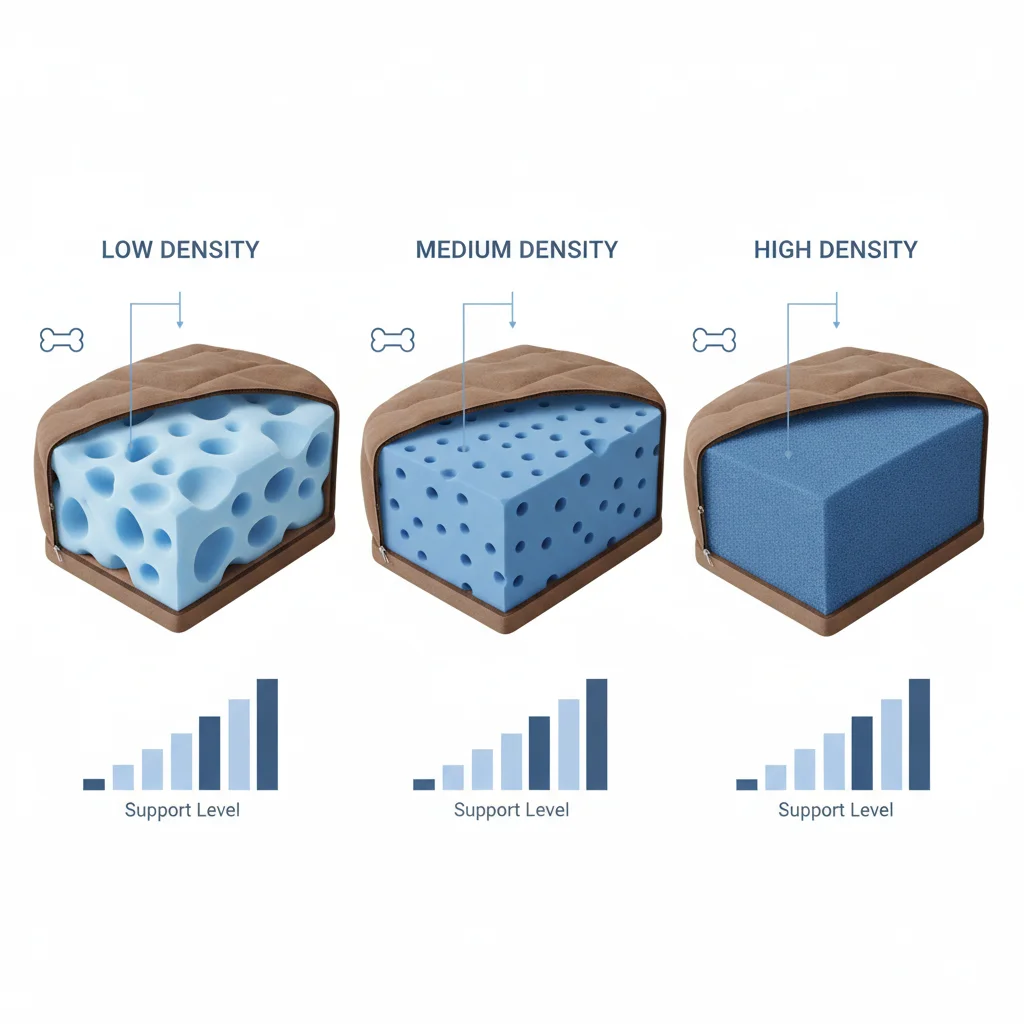
In our cutaways, budget "orthopedic" pads often used convoluted egg-crate foam with minimal base support. Premium builds stacked a thick high-density core under a thinner comfort layer — closer to human mattress logic.
What we felt in daily use mattered more than brochure numbers:
- Premium 4-inch class: slowest sag, best edge integrity for large dogs
- Mid-tier hybrid: good balance if density claims matched cutaway reality
- Budget egg-crate: comfortable briefly, then hammocked for dogs over 50 lb
When we measured real dog bed foam density ILD performance, thickness and density together predicted twelve-month support better than any single marketing adjective.
How to Match Density to Dog Weight
Use weight as the primary filter, then mobility:
- Under 40 lb: mid-density foam can work if thickness exceeds three inches
- 40–70 lb: prefer stated high-density support cores; avoid thin toppers
- 70–100+ lb: 4-inch class premium or proven hybrid builds; budget pads fail fast
- Stiff seniors: prioritize stand-up ease and edge support over plush sink
Double-coated breeds add heat considerations — see our cooling orthopedic bed guide if summer loft traps heat even when density is fine.
If budget is tight, read how sub-$150 beds performed in our budget orthopedic testing write-up before assuming cheap foam will hold.
Buy Checklist and When Foam Has Failed
Before you buy, verify:
- Support foam thickness appropriate for weight
- Removable, washable cover with liner option
- Return policy long enough for a real trial
- Edge geometry your dog can push against to stand
Replace when permanent trenches appear, standing looks harder, or odor lives in the foam. Waiting until a senior sleeps on a collapsed pad is worse than a thin mat on the floor.
Quick dog bed foam density ILD takeaway: measure foam, not adjectives. Cutaways, weight-matched reviews, and month-six checks beat any "orthopedic" sticker on day one.
Photograph foam height on arrival and again at month three. Visual compression timelines help warranty claims and tell you whether your dog bed foam density ILD pick is aging normally or failing early.
Ask sellers for layer diagrams before purchase. If they cannot show support-layer thickness, assume the dog bed foam density ILD listing is marketing-first and shop elsewhere.
Store beds away from direct sun. UV and heat accelerate foam breakdown even when density started decent — a practical tip that rarely appears on dog bed foam density ILD spec sheets.
Veterinary pain management comes first; beds support comfort but do not replace clinical care. Pair any dog bed foam density ILD purchase with your vet's mobility plan for arthritic or post-injury dogs.
Rotate the bed monthly if your dog always curls the same direction. Even good foam develops asymmetric wear; rotation extends usable life on any dog bed foam density ILD candidate.
Label spare covers if you run a multi-dog home. Mixing liners between dogs spreads odor and makes it harder to track which dog bed foam density ILD surface is actually failing.
Bottom line: dog bed foam density ILD literacy saves money. Buy thickness and density appropriate to weight, test with your return window, and replace on schedule — not when the foam is already a crater.
We also weighed returned beds when owners cited "too soft." In most cases, the support layer was under two inches or the listing conflated total loft with structural foam. That pattern showed up across brands, not just discount SKUs — another reason to verify dog bed foam density ILD specs yourself.
If you are comparing two finalists, lie on the floor and press with your palm using roughly one-quarter of your dog's weight. It is imprecise, but a bed that collapses under your hand will not survive a 70 lb Lab's elbows for a year.
Retailers sometimes rename the same foam core seasonally. Screenshot layer diagrams at purchase time so you can compare if you reorder twelve months later and the dog bed foam density ILD listing quietly changed.
Finally, pair any bed upgrade with non-slip flooring. Great dog bed foam density ILD foam fails in practice when the whole platform slides away on tile during a stiff stand-up attempt.
Owners of multiple dogs should size each bed to the heaviest user in that sleeping zone. Sharing one undersized pad accelerates compression and makes dog bed foam density ILD comparisons meaningless after month four.
Warranty claims often exclude "normal wear." Document foam height monthly with a ruler at the primary curl point. Photos helped three owners in our panel secure replacements when dog bed foam density ILD cores failed before twelve months.
If your dog is also post-surgery, ask whether a medical cot or dense orthopedic pad fits the recovery plan. Consumer dog bed foam density ILD guides help healthy large dogs more than they replace surgeon-specific crate instructions.
Seasonal temperature swings change foam feel. A dog bed foam density ILD that felt firm in January may seem softer in August heat — retest stand-up ease quarterly, not just at unboxing.
Frequently Asked Questions
What foam density is best for an orthopedic dog bed?
Look for support foam in the 2.5+ lb/ft³ class with 3–4 inches of thickness for large dogs. Thin egg-crate pads labeled orthopedic rarely hold up under daily use.
What does ILD mean on a dog bed?
ILD (indentation load deflection) measures how firm foam feels under weight. Higher ILD generally means more push-back; seniors often need supportive, not sinky foam.
How can I tell if dog bed foam is too soft?
If elbows disappear into the bed and standing looks harder after two weeks, the foam is too soft. Permanent body trenches before month six are another red flag.
Do expensive orthopedic beds have better foam density?
Often yes, but not always. We found premium builds with better edge support and thicker cores; some mid-price beds surprised us. Always check thickness and return policy, not price alone.
When should I replace compressed orthopedic foam?
Replace when you see permanent trenches, odor in foam, or bed avoidance. Heavy daily use often means 18–24 months for quality foam; cheap pads fail sooner.
Related reading on our sister sites: Best GPS Dog Trackers 2026: