Buying the best orthopedic dog bed for senior dogs is less about plush marketing and more about whether your dog can lie down, stay comfortable, and stand back up without a struggle. We tested orthopedic beds for twelve months with senior Labs, a stiff Golden, and one giant mixed breed with hip arthritis — tracking foam collapse, edge use, waterproof failures, and whether dogs kept choosing the bed.
The best orthopedic dog bed for senior dogs in our tests combined high-density foam, usable bolster edges, and a truly washable waterproof layer. Big Barker remained the giant-breed senior pick; mid-size Labs did better on supportive orthopedic beds with easier step-on height. Replace compressed beds every 18–24 months if your senior uses the same spot daily.
Compare giant-breed options in our our published head-to-head comparison format, and see accident-ready covers in our Litter-Robot 5 vs Petkit vs Neakasa reliability notes.
What Actually Helps Senior Dogs With Arthritis
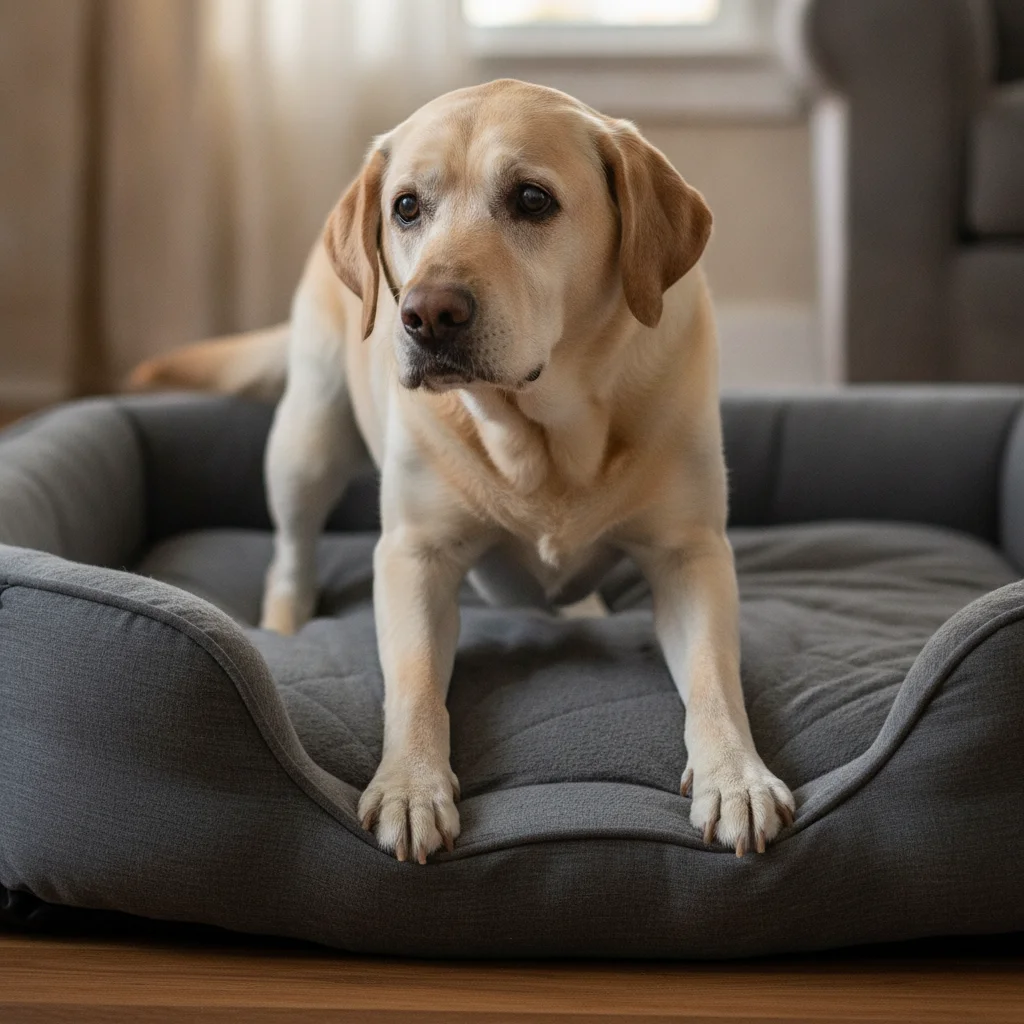
Arthritis care is veterinary first. A bed will not replace pain management, weight control, or mobility work. What a good bed can do is reduce pressure points and make transitions easier.
Features that mattered in real homes:
- Supportive foam that resists hammocking after months of the same sleeping curl
- Bolster or edge geometry dogs actually push on to stand
- Height the dog can enter without jumping (especially post-flare days)
- Cover systems you will wash — unused waterproof claims do not help
Soft, sinky beds felt cozy for a week and then became traps for stiff dogs. That is why “plush orthopedic” labels are unreliable. When we say best orthopedic dog bed for senior dogs, we mean support you can still feel after month nine.
Top Picks After 12 Months of Real Use
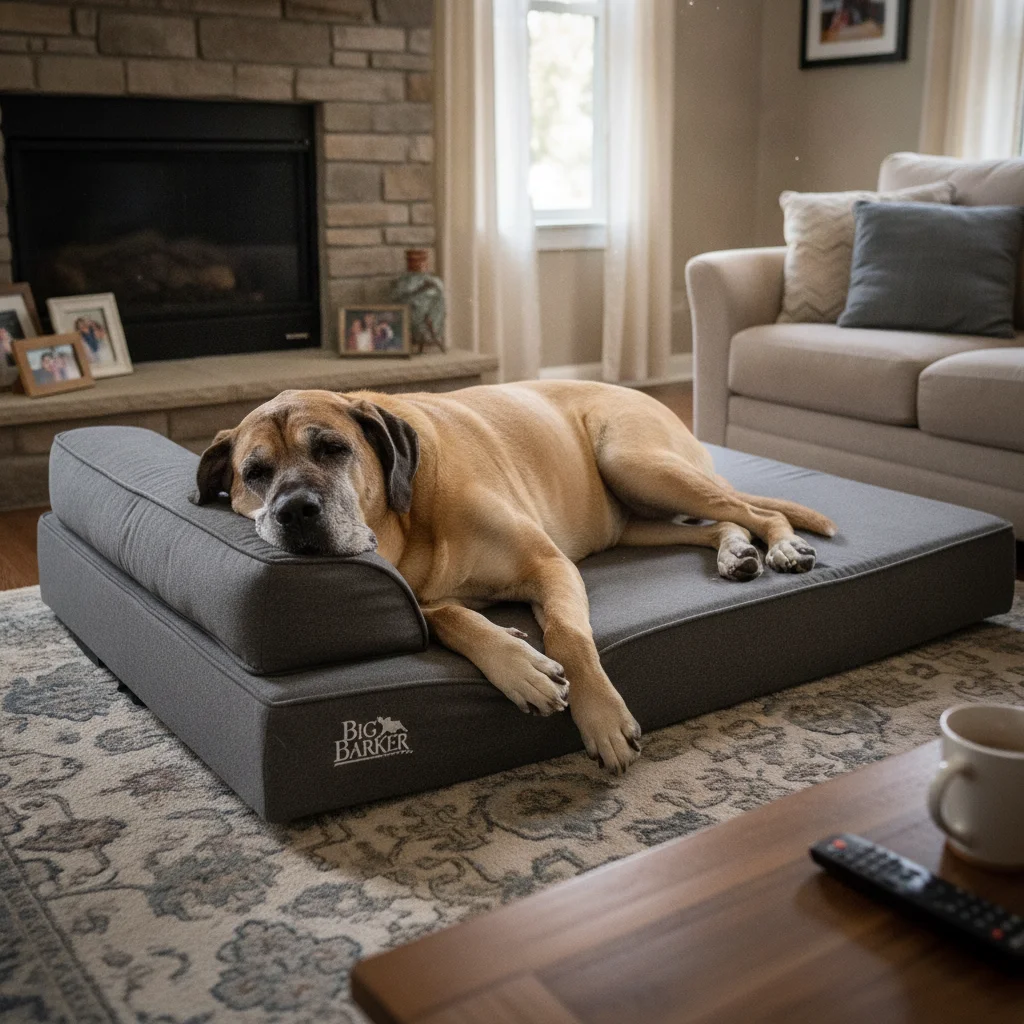
Best for giant seniors (100+ lb): Big Barker (4" class orthopedic). Edge support and thickness stayed meaningful for our heaviest dog. It is expensive, and that price is easier to justify when a cheaper bed compresses into a pancake.
Best overall for many Labs/Goldens: a high-density orthopedic bolster bed in the correct size. Snoozer-style orthopedic builds did well when foam stayed resilient and covers washed clean. Measure the dog stretched out; seniors often want more length than people expect.
Best value waterproof angle: FurHaven-style waterproof orthopedic options. Not the forever foam champion, but practical when accidents are part of senior life and you need a washable system without a giant-breed budget.
We kept returning to the same rule: match bed class to body weight and stiffness, not to Instagram aesthetics. The best orthopedic dog bed for senior dogs in a 45 lb Lab household is not automatically the same SKU that saved our giant mix.
Foam Density, ILD, and Edge Support Explained
You do not need a materials-science degree, but you do need skepticism. “Orthopedic” is unregulated on many listings. Look for:
- Stated foam thickness for the support layer (not just quilt loft)
- Higher-density foam language (around 2.5+ lb/ft³ class claims are directionally better than mystery foam)
- Photos/videos of heavy dogs without bottoming out
- Return windows long enough to test real sleeping
ILD (indentation load deflection) describes feel. Seniors often need supportive, not marshmallow. If your dog’s elbows disappear into the bed and standing looks harder after two weeks, the bed is too soft regardless of the label.
Edge support is the underrated feature. Dogs with arthritis use their front end to push up. A bolster they can brace on helped more than another inch of plush fill. Big Barker’s edge story is a big reason it stays on giant-senior shortlists.
The best orthopedic dog bed for senior dogs in our tests combined high-density foam, usable bolster edges, and a truly washable waterproof layer.
Waterproof Covers and Cleaning Reality
Senior households deal with urine accidents, spilled water, and drool. A zip cover that is merely “water resistant” failed faster than a true liner protecting the foam. Smell in foam is hard to reverse.
Practical cleaning setup:
- Washable outer cover on a schedule you will keep
- Waterproof liner as the foam’s last defense
- A second cover if laundry turnaround is slow
- A mat under the bed for hardwood grip and spill containment
If waterproofing is your primary pain point, prioritize that guide linked above — then come back to foam support so you do not buy a plastic-feeling bed your dog refuses.
Sizing, Placement, and When to Replace
Size to the stretched dog, not the curled Instagram pose. Place the bed where the dog already rests: same room as the family, not exile in a cold spare room. Orthopedic help fails if the dog never uses the bed.
Temperature matters too. Some seniors prefer cooler denser foam in summer and a thinner blanket on top in winter rather than a heat-trapping faux-fur cave. Watch for panting or bed avoidance after you change covers.
Replace when you see permanent trenches, cover seams failing, or avoidance behavior. Heavy daily use often means 18–24 months. Waiting until the foam is dead leaves seniors on a worse surface than a simple quality pad.
Quick buy checklist for the best orthopedic dog bed for senior dogs:
- Weight-appropriate support foam
- Usable edges for standing
- Entry height that matches mobility
- Wash path you will actually follow
- Return policy long enough for a real trial
One more practical note: pair the bed with a non-slip rug if your senior walks on hardwood. A great orthopedic surface still fails if the whole bed slides when the dog pushes up. We also liked keeping a thinner travel pad for cars so the home bed stays cleaner longer.
If your vet has flagged elbow calluses or pressure sores, ask specifically about denser foam and whether a medical cot is more appropriate than a consumer orthopedic bed. Consumer picks help many arthritic dogs; they are not hospital equipment.
Next: compare giant-breed builds in our our published head-to-head comparison format piece, or focus on covers via the Litter-Robot 5 vs Petkit vs Neakasa reliability notes.
Choosing the best orthopedic dog bed for senior dogs means balancing foam density, entry height, and washable covers against real arthritis mobility limits. Prioritize beds your dog will actually mount without hesitation, then judge support after several weeks of nightly use rather than a showroom squeeze test. Longevity scoring beats brochure claims every time for older joints.
Frequently Asked Questions
What is the best orthopedic dog bed for senior dogs with arthritis?
For giant seniors, Big Barker’s thick orthopedic foam and edge support led our tests. For most Labs and Goldens, a high-density orthopedic bed with a bolster and waterproof liner was the better daily driver.
Does memory foam help arthritis in dogs?
Supportive high-density foam helps more than soft sinky foam. Pure soft memory foam can feel plush but makes standing harder for stiff seniors.
How thick should an orthopedic dog bed be?
Large and giant seniors usually need about 3–4 inches of real support foam. Thin egg-crate pads compress too fast for daily arthritis use.
Are waterproof orthopedic beds worth it?
Yes for many seniors. Accidents and drool happen; a true waterproof liner under a washable cover protects foam and reduces odor.
How often should I replace a senior dog’s bed?
If the bed shows permanent body impressions or the dog avoids it, replace it. Heavy daily use often means 18–24 months.
Related reading on our sister sites: Best Elevated Dog Bowls 2026: