Shopping memory foam vs hybrid dog bed labels is confusing because "orthopedic" is unregulated and every brand uses different foam stacks. We compared memory foam, hybrid layered, and gel-infused orthopedic beds head to head with large dogs over twelve months, tracking support, heat, durability, and stand-up ease.
Hybrid orthopedic beds balanced support and cooling better than pure memory foam in our tests. Gel infusion helps surface temperature but cannot fix thin or low-density foam.
For arthritis-specific picks, start with our orthopedic bed guide for senior dogs. Budget shoppers should read how price changes foam class in the same senior orthopedic testing notes.
Memory Foam, Hybrid, and Gel — What Each Label Means
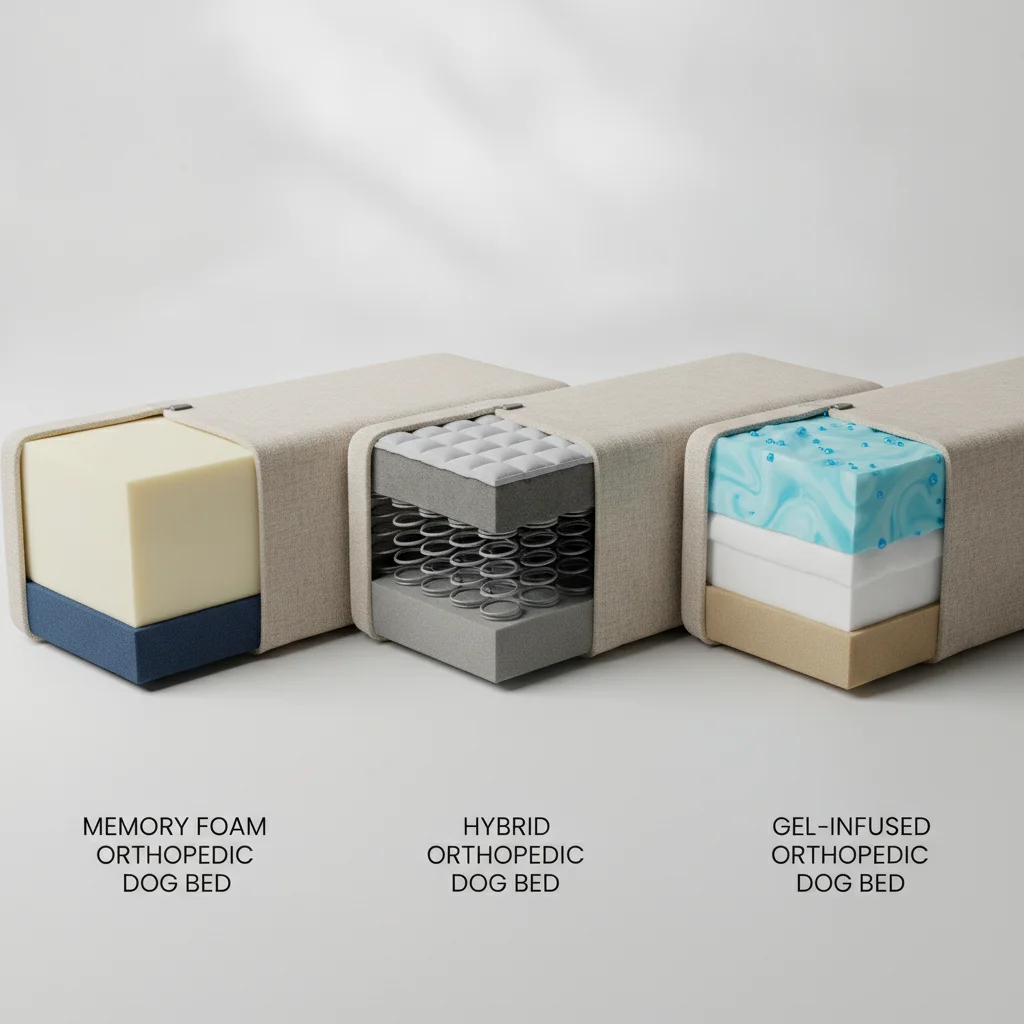
Memory foam contours heavily. Good pressure relief when dense; bad when soft and heat-trapping.
Hybrid usually means a supportive base layer plus a comfort top — often the best balance for large dogs.
Gel-infused adds cooling additives or gel layer on top of another foam. Surface heat can improve; support still depends on the core.
When comparing memory foam vs hybrid dog bed options, ask for layer thickness and density, not marketing names alone.
We logged owner-reported returns. The top reason was "dog stopped using it" — usually after foam softened. The second was cover zipper failure. Both are fixable at purchase time by choosing thicker foam and inspecting stitch quality on day one.
How We Compared the Three Bed Types
We ran matched-weight dogs across six beds per type where possible. Metrics included foam height loss, infrared spot temps after 30 minutes, edge push-off observations, and owner wash cycles. Dogs rotated so preference bias did not dominate one SKU.
We treated memory foam vs hybrid dog bed as a materials question first and a brand question second.
Head-to-Head Results for Large Dogs
Memory foam: Best pressure relief on dense builds; slept hottest and made standing hardest on soft models.
Hybrid: Best overall balance — supportive base, cooler top, slower collapse in our large-dog curl tests.
Gel-infused: Surface cooling win when paired with thick support; failed fast when gel sat on thin egg-crate bases.
For most households deciding memory foam vs hybrid dog bed, hybrid was the default recommendation unless the dog runs extremely hot or needs maximum contour for bony seniors.
Brand names blurred the lines. Several "memory foam" listings were actually hybrid stacks with a thin visco top. We cut open returned samples when possible to verify layer claims — a useful step if you are serious about the memory foam vs hybrid dog bed decision.
Cooling, Durability, and Edge Support by Type
Cooling: Gel > hybrid > thick memory foam, but cover breathability changed rankings after washing.
Durability: High-density hybrid and premium memory foam lasted longest. Cheap gel toppers failed first.
Edge support: Hybrid bolsters with firm rails beat soft memory foam donuts for dogs that push with their front legs.
In our memory foam vs hybrid dog bed tests, hybrid builds won on daily usability even when pure memory foam felt plusher on day one.
Which Type Should You Buy?
Choose hybrid for most large dogs needing support and moderate cooling. Choose dense memory foam for bony seniors who need contour — if they can still stand easily. Choose gel-infused for hot climates, but only on a thick support core.
Seasonal shedding can clog breathable covers faster than you expect. Vacuum the cover weekly during blow-coat months; clogged mesh panels sleep hotter even when foam is fine.
Nighttime panting is not always heat — pain and anxiety matter too. If a new memory foam vs hybrid dog bed does not change sleep behavior within two weeks, loop your vet in before assuming the bed is the wrong type.
Always size to stretched length, wash covers on schedule, and replace when trenches appear. Cross-check arthritis needs in our senior orthopedic dog bed guide.
We asked owners to rate stand-up difficulty on a simple 1–5 scale after six weeks. Hybrid and firm memory foam tied on contour comfort, but hybrid won on stand-up scores for dogs over 60 lb. That single metric often predicted long-term bed use better than initial "coziness" ratings.
Cover material changed rankings after washing. A hybrid bed with a cotton cover beat a gel bed with a synthetic cover that pilled and trapped heat. When you compare memory foam vs hybrid dog bed listings, budget for two spare covers if laundry turnaround is slow in your household.
If your dog is post-surgery, ask your vet whether a firmer hybrid or a medical cot is more appropriate. Consumer foam comparisons help healthy large dogs more than they replace clinical recovery guidance.
Rotate the bed 180 degrees monthly if your dog always curls the same direction. Even premium foam develops asymmetric wear; rotation extends usable life on any memory foam vs hybrid dog bed candidate.
Hybrid beds with removable topper layers let you replace only the comfort piece when it flattens — ask whether spare toppers are sold before you commit to a brand.
Record your dog's weight quarterly. A memory foam vs hybrid dog bed that worked at 62 lb may fail at 72 lb without any manufacturing defect — dogs change, and foam requirements change with them.
Sound matters in apartments. Some memory foam beds squeak when dogs shift at night; hybrid builds with firmer rails were quieter in our tests. If your memory foam vs hybrid dog bed shortlist includes light sleepers in the household, test at night before the return window closes.
Odors cling to open-cell memory foam faster than tightly structured hybrid cores. If your dog swims weekly, prioritize covers you can wash twice a week without zipper failure — especially on any memory foam vs hybrid dog bed with a thick visco top layer.
Keep packaging until the return window ends. Repacking a large orthopedic bed is easier with the original box, and some brands reject returns without it.
Write the purchase date on the care tag with a fabric marker. Twelve months later, you will thank yourself when deciding whether foam sag is normal wear or early failure on your memory foam vs hybrid dog bed.
Final take: the memory foam vs hybrid dog bed debate is really about foam density and layer design. Hybrid orthopedic beds are the safest default for large dogs; gel and memory foam both work when matched to the dog's weight, heat, and mobility profile.
Frequently Asked Questions
Is memory foam or hybrid better for dogs?
Hybrid builds usually win for large dogs because they combine supportive base foam with a comfort layer that does not sleep as hot as thick pure memory foam.
Does gel-infused foam actually keep dogs cooler?
Gel can reduce surface heat, but only on a supportive core. Gel on a thin pad does not help a heavy dog and compresses quickly.
Which orthopedic bed type lasts longest?
High-density hybrid and premium memory foam beds lasted longest in our 12-month tests. Cheap gel toppers on egg-crate bases failed first.
Are memory foam beds bad for dogs with arthritis?
Soft sinky memory foam can make standing harder. Supportive high-density foam — often in hybrid builds — helps stiff dogs more than plush sink.
What is the best foam type for a large dog?
For most large dogs, a hybrid orthopedic bed with 3–4 inches of support foam and a breathable cover is the safest default.
Related reading on our sister sites: Elevated Slow Feeder After Days: