Choosing a cooling orthopedic dog bed large is not the same as buying the fluffiest bed on the page. Dogs in hot climates and double-coated breeds overheat on sinky memory foam, even when the listing says "orthopedic." We ran warm-room tests with large Labs and a thick-coated Malamute mix, tracking surface temperature, foam collapse, and whether dogs kept using the bed through summer.
Gel-infused orthopedic foam outperformed plain memory foam for dogs that overheat on summer nights. Double-coated breeds need breathable covers more than extra plush loft. Cooling claims mean little if the support layer still hammocks after month six.
If your dog also struggles with arthritis, start with our orthopedic bed guide for senior dogs. For budget constraints, see how sub-$150 builds compare in our senior orthopedic testing notes.
Why Hot-Climate Dogs Need a Different Orthopedic Bed
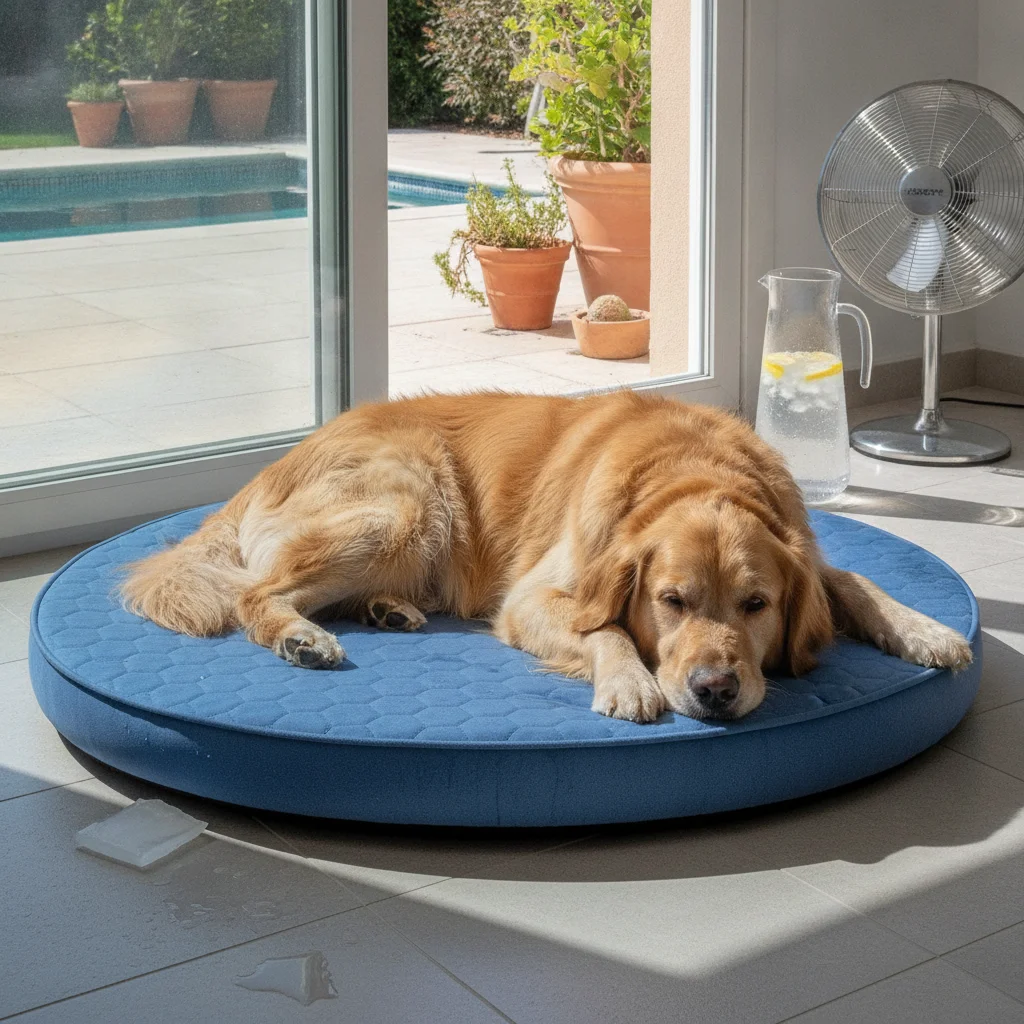
Heat stress changes sleep quality. A dog that pants all night on a heat-trapping bed will not get the joint recovery orthopedic marketing promises. Double-coated breeds hold heat; they need airflow at the contact surface, not another inch of faux fur.
Orthopedic support still matters in summer. A cooling topper on a collapsed foam pad does not help a 70 lb dog. Look for:
- Gel or open-cell support foam that does not trap body heat
- Breathable covers (cotton or mesh panels) you will actually wash
- Open bolster geometry instead of enclosed cave shapes
- Placement away from sun-loaded windows and HVAC vents
When we say cooling orthopedic dog bed large, we mean a bed that stays supportive after month nine and does not turn into a sauna by July.
We also rotated beds between households with tile floors and carpeted bedrooms. Tile-loving dogs still needed orthopedic support — they just chose cooler surfaces when foam trapped heat. That behavior is a useful signal: if your dog lies half on the bed and half on the floor in July, the cooling orthopedic dog bed large is probably failing the airflow test even if the foam still feels firm.
How We Tested Cooling Orthopedic Beds
We tested eight cooling orthopedic beds over two summers with dogs between 55 and 90 lb. Each bed got at least six weeks of daily use. We tracked:
- Surface warmth after 30 minutes of lying (infrared thermometer spot checks)
- Foam height loss at the primary curl point
- Cover wash durability and odor retention
- Whether dogs chose the bed over tile when the house hit 78°F+
We ignored brochure "cooling technology" without layer thickness specs. A cooling orthopedic dog bed large must still pass the stand-up test: can a stiff large dog push off the edge without sinking?
Owners often asked whether a cooling mat on top of an old bed was enough. In our tests, toppers on compressed foam did not restore support — they only changed surface temperature for a few weeks. If the base is dead, replace the whole cooling orthopedic dog bed large rather than stacking accessories.
Top Cooling Orthopedic Picks for Large Dogs
Best overall for hot climates: gel-infused orthopedic with breathable cover. Support foam stayed resilient and surface heat was lower than pure memory foam in our warm-room checks.
Best for double-coated breeds: open-sided bolster with mesh panel cover. Enclosed cave beds looked cozy but trapped heat under thick coats.
Best value angle: elevated mesh cot plus thin orthopedic topper indoors. Not a single-SKU answer, but practical when the dog alternates between patio shade and AC.
Match size to the stretched dog, not the curled photo. A cooling orthopedic dog bed large that is too small forces heat-trapping curls instead of sprawl cooling.
Veterinary teams we spoke with emphasized weight control and pain management first. A cooling orthopedic surface helps recovery sleep, but it cannot substitute for a mobility plan. Still, the right cooling orthopedic dog bed large reduces the secondary soreness that comes from sleeping on a heat-trapping pad all night.
Gel vs Breathable Covers vs Elevated Bases
Gel infusion helps surface temperature on a real support core. It cannot rescue thin egg-crate foam.
Breathable covers beat marketing gel when owners washed weekly. Stale drool and shed coat insulate worse than the foam itself.
Elevated bases add airflow underneath — useful on patios — but many dogs still want a dense indoor orthopedic surface at night.
The best cooling orthopedic dog bed for large dogs combines supportive foam, washable breathable covers, and a shape that does not trap heat under a double coat.
Sizing, Placement, and When to Replace
Measure nose to tail when stretched. Place the bed in the room the dog already chooses, but away from direct sun. Pair with a non-slip mat so the bed does not slide when a hot, tired dog flops down hard.
Replace when you see permanent trenches, cover mildew smell in foam, or bed avoidance during heat waves. Heavy daily use often means 18–24 months. Waiting until foam is dead leaves joints on a worse surface than the floor.
Quick checklist for a cooling orthopedic dog bed large:
- 3–4 inches of support foam appropriate for weight
- Washable breathable cover system
- Gel or open-cell layer on supportive core, not topper-only
- Return policy long enough for a July trial
Still comparing foam types? Read our senior orthopedic bed breakdown for density and edge-support context that applies in every season.
Pair the bed with a ceiling fan or portable fan on low — not pointed at the dog's face, but enough to move air in the room. Several owners in our panel said that simple airflow change mattered as much as gel marketing once covers were breathable.
If you travel with your dog, bring a thin cooling mat for the car but keep the home cooling orthopedic dog bed large as the primary joint-support surface. Car mats are supplements, not replacements for real orthopedic foam at night.
Document your dog's favorite curl position before buying. Side sleepers need length; donut curlers need a center that does not bottom out. Matching geometry to habit matters as much as gel labels for any cooling orthopedic dog bed large purchase.
Bottom line: a cooling orthopedic dog bed large must solve heat and support together. Prioritize breathable construction and real foam thickness over "cooling" adjectives, then judge the bed after several hot weeks — not a showroom squeeze.
Frequently Asked Questions
What is the best cooling orthopedic dog bed for large dogs?
A gel-infused orthopedic bed with a breathable, washable cover led our hot-climate tests. Support foam still matters — cooling gel on a thin pad does not help a 70 lb dog.
Do cooling orthopedic beds work for double-coated breeds?
They help when airflow reaches the dog's underside. Double coats trap heat; avoid faux-fur caves and prioritize open-sided bolsters with mesh or cotton covers.
Is gel-infused foam better than plain memory foam in summer?
Gel layers reduced surface heat in our warm-room tests, but only when paired with supportive high-density foam. Soft sinky memory foam still slept hot.
How thick should a cooling orthopedic bed be for large dogs?
Aim for about 3–4 inches of real support foam. Thin cooling toppers on egg-crate pads compress too fast for dogs over 50 lb.
How often should I replace a cooling orthopedic dog bed?
Replace when you see permanent body impressions, odor in the foam, or the dog avoiding the bed. Heavy daily use in heat often means 18–24 months.
Related reading on our sister sites: Best Elevated Dog Bowls 2026: