Anyone still living with a heavy duty dog crate after 18 months in a humid walk-up already has data Amazon unboxing photos never show: the tray pits, the door sags, and the “double latch” that survived month three starts walking out of its keepers during work blocks.
This is an ownership review, not another clone listicle that scores BOLDBONE and HIWOKK as indestructible on day one. We tracked what actually fails in apartments—humidity, stairwell moves, laminate rattle, and Houdini dogs who keep practicing the same trick.
Basement and walk-up humidity rusts trays before welds fail—year two is when cheap powder coat peels into chew hazards. If your crate already sings at 5 a.m. or the tray stains the floor, you are past accessory hacks and into product-class decisions.
What we tracked over 12–18 months
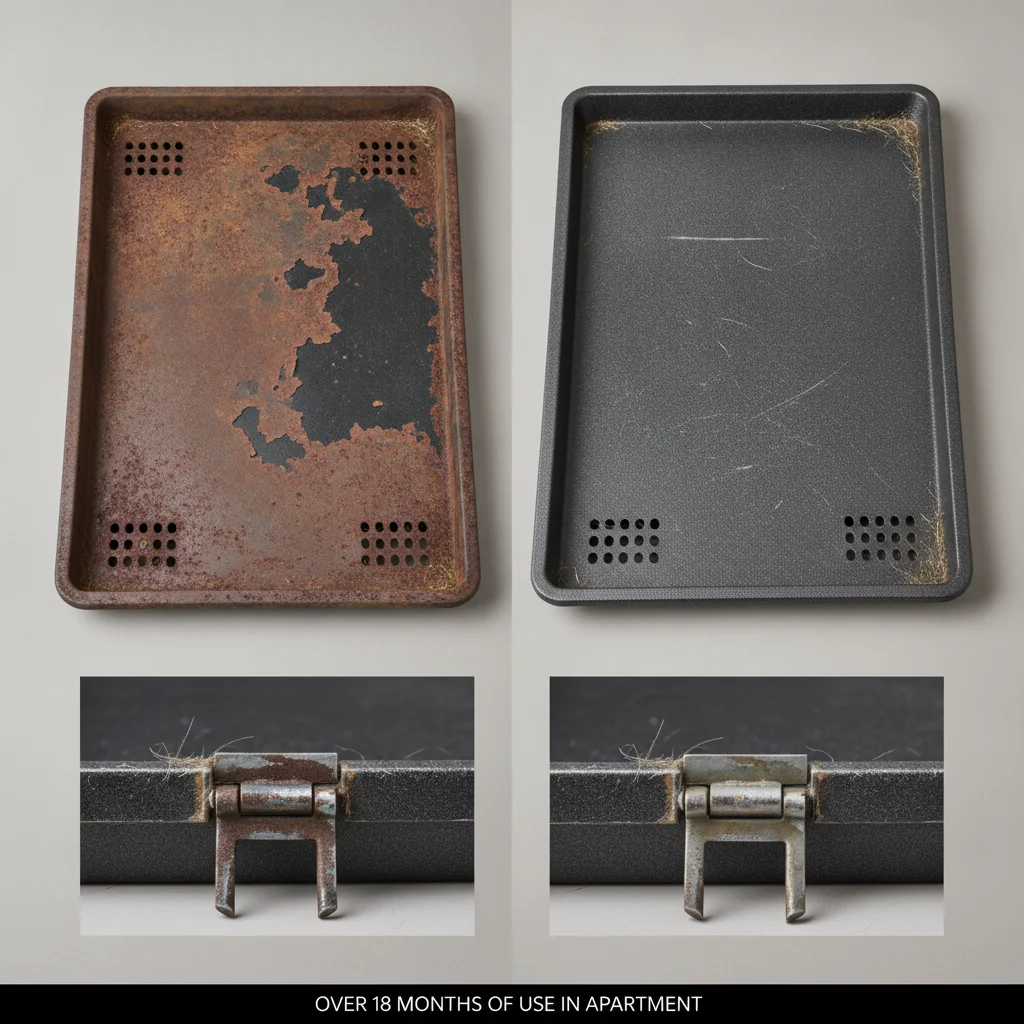
We treated 12–18 months as the first honest checkpoint. Unboxing reviews miss rust under the tray, flattened wheels, and doors that no longer sit square after a dozen hallway moves. Apartment wear is not the same as a garage kennel sitting on dry concrete.
Pass/fail here is mechanical, not “does the dog still nap in it.” A crate can look heavy in photos and still fail the job if the latch no longer seats or bars spread a muzzle-width.
| Class | Looks like at month 3 | Typical 12–18 month failure | Still holds a Houdini? |
|---|---|---|---|
| Rotomolded crash kennel (Gunner-style) | Scuffed floor, tight door | Interior scratches, odor, worn latch kit | Yes if door still seats and hardware is original spec |
| Aluminum/hybrid crash crate (Impact-style) | Quiet, tight bumpers | Bumper crush, rattle, latch play | Usually, until bumpers and pins go slack |
| Welded steel kennel | Thick bars, real welds | Tray rust, hinge wear, powder-coat chips | Yes if welds and latch geometry stay in plane |
| Amazon “heavy duty” foldable | Looks like a tank on camera | Tray rust, hinge rack, bar spread, latch sag | Often no—same slide-bolt geometry as the iCrate it replaced |
Models: Gunner, Impact, welded steel, Amazon foldables
We grouped crates the way apartments actually buy them. Crash-style rotomolded kennels (Gunner and similar) and aluminum/hybrid crash crates (Impact and similar) are one class: framed doors, crash marketing, and prices that hurt. Welded steel kennels are another: real welds, still rust-prone trays. Amazon foldables sold as escape-proof are a third class even when the listing says 1-inch gauge.
Ruff Land sits with the crash shells. MidWest iCrate and furniture crates are disqualified from this review—they fail latch tests before year one. We still mention them as the crate most readers already retired.
- Crash shells: odor and hardware kits, not rust maps
- Welded steel: tray and hinge first, then latch sag
- Clone foldables: week-six “heavy duty” photos, month-twelve racked doors
If you skipped the Gunner vs Impact vs Amazon hardware comparison at purchase, this page is the sequel: what those classes look like after a year of humid air, tile bounce, and a dog who still tests the door.
Apartment conditions: humidity, stairs, noise
Walk-ups and garden apartments punish crates differently than a ranch house. Steam from showers, laundry closets, and basement damp sits on cold steel. Trays pool after mopping. Condensation under a plastic pan is enough to bloom rust at the rail even when the bars still look black.
Stairs matter because you will move this thing. A 70-pound kennel that “fits the living room” still has to rotate on a landing. Every bump loads hinges and door pins. Wheels that helped move-in day flatten and drum on laminate at 5 a.m.; many owners remove them and discover sagging doors.
Neighbor noise is an ownership metric. Pawing is one complaint. Metallic ping from a loose tray is another. A crate that holds the dog but wakes 2B has already failed apartment life.
Pass/fail on latch sag and tray rust
Latch sag is the silent fail. The bolts still “close” from the kitchen, but the door has dropped a few millimeters. A paddler or door-lifter learns the new slack in a week. If you can lift the bottom rail with two fingers after a year, the product class is done—even if the steel looks thick.
Tray rust is a hygiene fail before it is a structural fail. Pitting cuts paws, stains laminate, and holds ammonia. Powder coat that peels into flakes becomes a chew hazard. Replace the tray if the brand sells one; retire the crate if the tray rail welds are compromised.
- Fail: door no longer sits square with bolts fully seated
- Fail: bar gap a muzzle can work, even if it started tighter
- Fail: tray edges sharp or flaking into bedding
- Pass: same latch throw as month one, dry tray, no new rattle after a hallway move
Crash kennels skip rust but pick up scratched interiors and odor; wire foldables fail at hinges and tray edges first. Do not mix those wear maps when you shop the replacement.
Rotomolded and crash-style kennels
Plastic and aluminum crash kennels win the rust argument in apartments. They lose on smell, interior chew, and replacement hardware that is not sold at the hardware store downstairs. They also win on door-lift: a framed hatch does not pop the way a hanging wire door does.
They are not “set and forget.” After a year, owners complain about the same three things: odor in scratches, worn bumpers, and latch kits that feel looser than the unboxing video.
Gunner shell odor and latch kits
Rotomolded polyethylene does not rust. It does scar. A determined chewer or a dog who spins will leave grooves that hold saliva and urine film. Enzyme cleaner helps; steam that you cannot rinse in a tub-less studio does not. Odor after a year is usually the liner, not a “toxic plastic” mystery.
Latch kits wear. Pins, sliders, and rubber isolators are the consumables. If the door still closes but you hear extra travel, order the official kit before the dog learns the slop. Aftermarket bolts that change geometry can void the crash story you paid for.
- Keep the kennel off the shower wall; humid bathrooms still oxidize steel hardware
- Dry the floor pan after mopping—standing water under a plastic shell still stinks
- Do not drill extra holes “for air” in a crash-rated wall
Gunner-class crates still make sense when the original wire box already lifted. They make less sense if the failure was panic chewing on a closed door and a behavior plan was never started. Steel you cannot rust can still injure a panicked dog.
Impact door bumpers and aluminum rattle
Impact-style crates use bumpers and framed doors that start quieter than clone steel. After 12–18 months, crushed bumpers are the typical wear. Once they flatten, the door ticks on every hit and neighbors hear it through laminate.
Aluminum does not rust like a pan. Fasteners still loosen. Check pins after every stairwell move. A crate that rattled only on tile at month two and now rattles on a rug is telling you the door is out of plane.
Replacement bumpers beat a DIY pool-noodle hack. Foam that the dog can peel is a GI-foreign-body risk, not a quiet kit. If the brand does not sell bumpers anymore, that is a retire signal—not a craft-store afternoon.
When plastic beats rust—and when it does not
Choose crash shells when humidity already killed a tray, when you move apartments often, or when door-lift was the original escape. Skip them if you cannot tape the footprint through the door swing, if the elevator will not take the rigid box, or if the dog only destroys things after you leave and a clinician has not cleared crating.
Plastic also hides damage. A cracked corner under a scuff is easier to miss than a rust bloom. Press the door frame seasonally. If it flexes where it used to be rigid, stop using it as a leave-the-dog kennel.
Crash kennels skip rust but pick up scratched interiors and odor; wire foldables fail at hinges and tray edges first.
Welded steel and Amazon heavy-duty foldables
Welded kennels can last years in apartments if you dry the tray and the welds were real. Amazon foldables that copy the same photos often fail the same way consumer iCrates fail: the front diamonds, the tray rusts through, and the dual slide bolts become theater.
Gauge in a listing is not a 12-month test. Knee-press the front at month twelve the way you should have at unboxing. If it bows more than it did, the dog has a new lever.
Weld pinholes and bar spread
Look at corners with a flashlight. Pinholes and hairline cracks at welds grow. Bar spread shows as a muzzle slot that was not there. Once spacing opens, clips on the latch do not matter—the dog works the grid.
Foldables that clip panels together instead of welding them rack faster after stairwell carries. “Heavy duty” powder coat hides thin wire until it chips. Chip maps along the door frame are a hinge-stress diary.
- Reject: panels tied with zip hardware pretending to be a frame
- Reject: welds that look like glue blobs in product photos and look worse in person
- Keep: consistent beads, no new bar gap, door still in plane
A welded kennel that stays square is still a better 18-month apartment tool than a crash crate you cannot rotate on the landing—if the latch class matches how the dog escapes.
Tray rust maps and replacement parts
Trays fail from the underside. Lift the pan. Orange dust on the rail is early. Flakes into bedding is late. Humid buildings plus a damp mop plus a metal pan is a rust recipe even if you never leave a wet bowl inside.
Replacement trays exist for some welded brands and almost never for no-name Amazon SKUs. If the pan is unique and the seller is gone, budget a full crate, not a sheet of vinyl. Vinyl liners trap water and accelerate rust.
Do not grind rust in a studio without a plan for dust. Replace the tray or retire. Sharp edges are a paw injury, not a patina.
Clone steel that looked fine at month three
Month three is when clone crates get five-star reviews. Month twelve is when the door rattles and the tray stains. The listing still says escape-proof because nobody updates photos.
If your Amazon crate already needs carabiners, you do not have a missing-accessory problem. You have the same slide-bolt geometry the dog beat on the iCrate. A second clone with a louder title will not last another 18 months in the same hallway.
Powder coat peeling on bars is not cosmetic once the dog licks flakes. That is a retire-or-recoat decision, and recoating a foldable in an apartment is rarely worth the fumes.
Neighbor noise and apartment moves
Durability is useless if 2B files a complaint. Metal crates sing. Plastic crates boom. Both get worse when parts wear. Treat noise as a wear indicator, not a personality issue of the dog.
Work-from-home crating is the loudest use case: the dog is in the box while you type, and every tray bounce hits during calls. Leave-the-dog crating is quieter for you and louder for neighbors who work nights.
Wheel removal and mat fixes
Wheels that helped move-in day flatten and drum on laminate at 5 a.m.; many owners remove them and discover sagging doors. If the crate was designed to sit on casters, removing them can drop the frame and misalign the latch. Put it on a dense rubber mat after you park it, not on four dead wheels.
Thin yoga mats do nothing. A stall mat or dense rubber tile kills ping better than a $12 “quiet crate” pad. Leave a wipeable surface under rust-prone trays so you see leaks.
- Park the crate; do not leave it on spinning casters all year
- Check latch throw after you change height (wheels off, mat on)
- Skip felt pads that the dog can peel and swallow
Stairwell carries and hinge stress
Every move is a crash test you did not buy. Corners of landings rack doors. Two-person carries still ding pins if you use the door as a handle. Lift from the frame.
Foldable crates suffer more because the hinge is the product. After two apartments, a “heavy duty” folder can need a new door while the crash kennel only needs a bumper. That is the real TCO, not the Amazon price gap at checkout.
If you cannot get a rigid kennel down the stairs without rotating it on a rail, do not order the next size up. Measure the landing before you replace a failed crate with a larger failure.
When rattle means the latch is failing
New rattle after a quiet year is a geometry warning. Tray bounce is one cause. A sagging door is worse. If the rattle happens when the dog hits the door, assume the bolts are not seating even if they look closed from across the room.
Film it. A 15-second clip is more useful than another “quiet kit” listing. Alignment first, then bumpers, then a different door class. Clips that clank are not a noise solution.
If the complaint from next door is barking, hardware will not fix it. If the complaint is metallic ping at the same time every morning, you can fix wear parts—or you can keep buying pads while the latch loosens.
Maintenance that actually extends life
Apartment maintenance is drying, alignment, and official parts—not drilling, not zip ties as a lifestyle, not coating flakes with another rattle-can in the stairwell. Fifteen minutes a month beats a $400 surprise when the door drops.
Skip anything that changes crash geometry on a rated kennel. You bought the rating or you did not. DIY steel straps can create sharp edges and a false sense of security.
Tray drying and coating care
Pull the tray after mopping. Wipe the rail. Let it dry before the dog goes back in. In basement units, a cheap moisture absorber in the room does more for rust than a miracle spray on the bars.
Do not soak powder coat in acidic cleaners. They bloom rust at chips. Neutral soap, dry thoroughly, replace the tray when pits start. Pee pads that stay wet against steel are rust accelerators—use a liner you can hang.
- Weekly: lift tray, dry rail, check latch throw
- Monthly: knee-press the door, look for new bar gap
- After every move: pins, bumpers, wheel locks
Official quiet kits vs DIY drilling
Buy bumpers and latch kits from the kennel maker when they exist. Rubber isolators that match the door beat random weatherstripping the dog can strip.
Do not drill extra ventilation in crash walls. Do not tap new holes in a latch plate “so it sits better.” You will oval the hole and the bolt will never seat the same way. If the door needs a new hole, the door is done.
Carabiners as a year-two plan are a confession that the latch class was wrong. Use them as a bridge to a replacement, not as furniture.
Retire criteria before a hallway breakout
Retire when bolts no longer fully seat, bars have spread, welds crack, or the door lifts under a two-finger test. Retire when rust is sharp. Retire when the dog is blooding a muzzle on a “temporary” clip setup.
Do not wait for a hallway tour during a work call. Houdinis practice. Slack that appears at month 14 is a skill the dog will use at month 15.
A stronger crate is not treatment for separation panic. If destruction only starts after you leave, talk to a veterinarian or qualified behavior professional before you spend four figures on a quieter tank.
What to buy next if yours failed
Match the replacement to the failure, not to a new Amazon title. Rusted tray plus a latch that still seats can be a tray or a welded upgrade. Sagging slide bolts on a flexed door is a different product class. Odor in a crash shell with a tight door is cleaning and a liner, not a third brand of polyethylene.
Measure the hallway and door swing again. The crate that failed may have been the maximum that fit. A Gunner that cannot rotate on the landing is the wrong upgrade no matter how well it ages.
Upgrade path by failure mode
- Tray rust, latch still square: replacement pan or welded kennel with a dry protocol—not another clone folder
- Door-lift or paddle on slide bolts: framed crash door or pin/rotary latch class
- Panel flex / bar spread: leave foldables; welded or crash frame
- Rattle from bumpers: OEM bumpers first; then a quieter shell if the door is out of plane
- Panic injuries: stop upgrading steel until a clinician clears confinement
Size to adult length with a small turnaround. A vault that blocks the hallway gives more leverage to a Houdini and more surface for rust.
Link to latch problem page and buying guide
If the dog is still opening hardware, diagnose the trick before you spend. Latch padders, door-lifters, and panel-racking dogs need different doors. Then use the escape-proof apartment crate shortlist to pick a class that still fits a stairwell.
When you are choosing crash shells versus clone steel on purpose, the hardware comparison is already done: footprint, noise, and latch type—not star ratings from month one.
Do not buy a third consumer foldable “just to try a bigger one.” Upgrade latch class and gauge first. Year-two ownership is where that decision shows.
Honest disqualifiers still standing
MidWest-style thin wire, soft crates, furniture crates, and ex-pens sold as escape-proof still fail this job. They fail faster in apartments because there is no garage to hide the wreckage and neighbors hear the rattle.
Amazon clones that reuse iCrate bolt geometry fail the 12–18 month test even when the title says heavy duty. If you cannot name the latch type and the weld quality, you are shopping a photo.
Crash kennels that will not fit the elevator are also disqualified—strength you cannot move is a different problem. Tape the box tonight. The next crate has to survive humidity and the landing, not just the product page.
Frequently Asked Questions
How long should a heavy-duty dog crate last in an apartment?
A quality welded or crash kennel should keep latch geometry for years if the tray is kept dry and the dog is a true fit. Thin-wire foldables often rack or rust through trays in 12–18 months in humid units even when the marketing says indestructible.
Why does my crate rattle more after a year?
Tray bounce, worn bumpers, loose hinges, and sagging doors all add noise. Rattle often precedes latch failure because the door no longer seats square. Fix alignment and replace wear parts before the dog learns the new slack.
Is rust on the tray dangerous?
Sharp rust edges cut paws and stain floors. A pitted tray also holds odor and ammonia. Replace the tray if you can; retire the whole kennel if welds at the tray rail are compromised.
Do Gunner or Impact crates rust in apartments?
Rotomolded and aluminum shells do not rust like steel trays, but scratched plastic holds odor and hardware kits still wear. Steel components on hybrid models can surface-rust in steamy bathrooms—keep kennels away from shower walls.
When should I replace instead of repair?
Replace when the door sags enough that bolts no longer fully seat, bars have spread beyond safe spacing, or welds show cracks. Patching with DIY steel can void crash ratings and create sharp edges.
Your next step
Lift the tray, two-finger the door, and name the wear: rust, sag, bumper crush, or bar spread. Then stop funding the same geometry. Dry what you keep, replace what has left plane, and tape the footprint so the next kennel still turns the landing in this apartment.
Related reading on our sister sites: Elevated Slow Feeder After Days: