Why a 14-month Furbo test beats unboxing reviews
If you are hunting a furbo 360 long term review, you already know unboxing clips and week-one treat tosses tell almost nothing. Treat dispensers fail on month eight, not day three. Motors that feel crisp in a demo can stutter once treat oil, dust, and summer humidity coat the chute.
We ran one Furbo 360 on a kitchen counter aimed at a medium mixed-breed dog for fourteen months. The routine was deliberate: four to six manual treat launches on weekdays, two on weekends, plus motion alerts during work hours. We logged jams, cleaned on a fixed schedule, and compared notes against a fresh Furbo 360 we kept for spot checks.
Short reviews reward shiny apps. Long tests reward honesty about plastic wear, subscription fatigue, and whether the treat gimmick still justifies counter space after the novelty fades. This page is that honesty pass—not a spec recap. For head-to-head context, see our Furbo 360 vs Petcube vs Enabot comparison before you decide if Furbo is even the right brand.
We scored durability on four axes: camera and rotation reliability, treat-path jams per month, exterior wear, and whether the NannyCam subscription still felt fair at renewal. Anything that needed a factory reset counted as a reliability ding even if hardware looked fine.
- Daily volume: 4–6 launches on workdays mimics a separation-anxiety routine
- Cleaning: weekly chute wipe, biweekly hopper deep clean
- Controls: same treat size (medium training treats) for the whole test
- Baseline: fresh unit comparisons at month 6 and month 12
Owners who only peek occasionally should weight camera checks more than treat stats. Owners who train through the dispenser should weight jam frequency and cleaning time higher. Our dog cared about the toss; we cared about whether the toss still worked on a Tuesday in February.
Camera, audio, and app after year one
Daytime 1080p stayed sharp enough to read ear posture and couch posture changes. Colors were slightly warmer after year one—likely lens dust we did not notice until we wiped the bubble. The 360 rotation motor remained smooth; we heard no grinding when spinning to follow the dog across the living room.
Night vision was the softest spec over time. Grain increased modestly after month ten, especially on the far side of the room. Still usable for “is the dog on the bed or the floor” checks, but not for reading label text on a package across the room. A microfiber wipe on the lens every month helped more than any app setting tweak.
Two-way audio stayed clear for short cues. Long lectures still sound tinny—that is true on day one—but quick “leave it” prompts worked. Bark alerts remained useful though false positives rose when the dishwasher ran or when a neighbor’s dog walked past the window. Tightening sensitivity in the app trimmed noise without killing real alerts.
App launch times on iOS were stable. Android on an older phone showed occasional two-second delays after month twelve—annoying during a bark spike but not a dealbreaker. Firmware updates arrived roughly quarterly; none bricked the unit, though one update reset notification preferences and required a ten-minute re-tune.
If camera-only reliability is your primary worry—not treats—compare separation-anxiety workflows in our guide to the best pet camera with treat dispenser for anxious dogs. That page explains when toss mechanics matter versus when a simple wide-angle stream is enough.
Treat mechanism durability and jam patterns
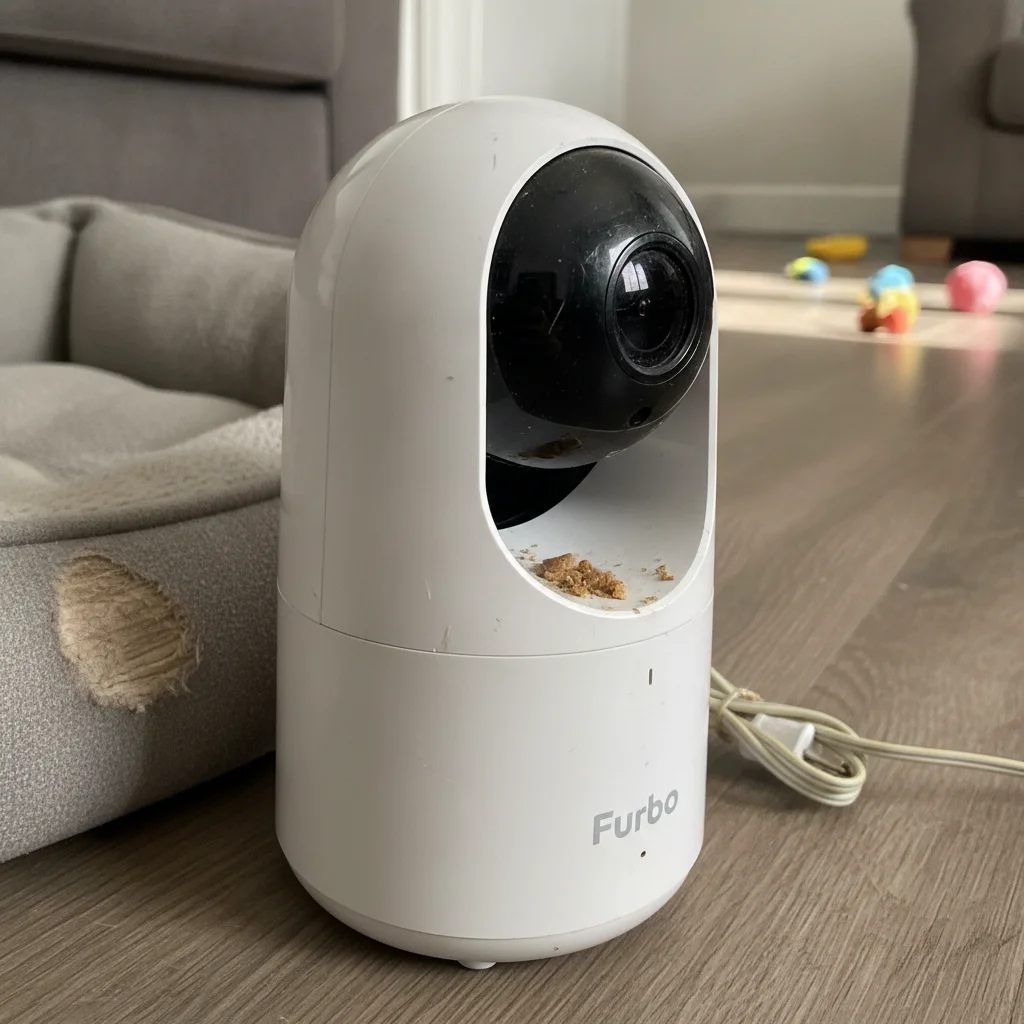
The treat path is where long-term Furbo ownership lives or dies. Months one through six felt nearly flawless: rare jams, predictable launches, happy dog. Month seven introduced occasional double-feeds—two treats when we asked for one—usually when the hopper was overfilled. Month ten brought small jams twice a week if we skipped the biweekly deep clean.
Jam anatomy was consistent: treat oil plus dust built a thin film on the paddle and chute lip. The motor still spun; treats wedged at the exit. A cotton swab and isopropyl wipe cleared most stalls in under two minutes. Never needed to disassemble beyond the hopper lid in fourteen months.
Monthly jam log (our household)
| Period | Jams per week | Typical fix | Notes |
|---|---|---|---|
| Months 1–6 | 0–1 | Shake hopper | Overfill caused doubles |
| Months 7–9 | 1–2 | Chute wipe | Summer humidity spike |
| Months 10–14 | 2–3 | Deep clean | Skipped cleans correlated |
Motor torque still felt strong at month fourteen. We never heard the sad grinding some owners report when the paddle strips. Paddle plastic showed micro-scuffs but no cracks. The hopper lid hinge remained tight; the silicone gasket flattened slightly and let a few more crumbs escape when overfilled.
Treat size discipline mattered. Medium soft training treats worked. Large crunchy biscuits occasionally bridged the chute. If your dog needs high-value jerky for anxiety work, budget extra cleaning time—that is not a Furbo-only problem, but Furbo’s narrow chute punishes oily jerky faster than wide-mouth dispensers.
Jams rose with neglect, not motor death—cleaning cadence predicted reliability more than brand luck.
Build quality, cleaning, and subscription math
Exterior white plastic picked up scuffs from daily nudges when we grabbed the unit to wipe the lens. No structural cracks. The weighted base still resisted knock-over from a 45-pound dog jumping nearby. Cable strain relief at the back showed minor whitening but the USB port seated firmly.
Cleaning workflow became muscle memory: empty hopper, warm water rinse, dry fully, q-tip the chute, light alcohol on the paddle. Ten minutes biweekly. Owners who hate small appliance hygiene will hate this device after month six—plan accordingly.
Subscription math is the other long-term stressor. NannyCam features—cloud clips, smart alerts, extended history—gate behind the paid tier. After a year, we still paid because bark clips helped apartment neighbor conversations. If you only live stream manually, the subscription feels thin unless you value clip sharing.
- Hardware hold: unit still functional at month 14 with cleaning discipline
- Hidden cost: treats + subscription + time cleaning
- Resale: strong if you deep clean and show jam logs to buyers
- Warranty: check remaining coverage before motor issues; our unit never needed it
Power draw stayed negligible on a smart plug monitor—pennies per month. Heat buildup was mild; we never smelled hot plastic even during summer heat waves with AC cycling.
Verdict: upgrade, keep, or skip the Furbo 360
Keep it if your dog’s anxiety routine depends on timed tosses and you will maintain the hopper. Our furbo 360 long term review conclusion: camera and rotation aged gracefully; treat reliability stayed acceptable with biweekly deep cleans even as small jams clustered after month ten.
Upgrade or switch if jams exceed your patience, if you need sharper night vision for puppy monitoring, or if multi-dog fairness matters more than brand loyalty. Rotating-head competitors can cover wider rooms with less repositioning—worth cross-shopping before you buy a second Furbo.
Skip Furbo entirely if you only want a hallway cam without toss mechanics. A simple indoor camera plus a treat puzzle on the floor may outperform a premium dispenser you rarely launch.
Fourteen months did not turn the Furbo 360 into a disposable gadget. It turned it into a maintained appliance—like a coffee grinder that needs burr cleaning. Respect the maintenance and it still delivers the dopamine loop anxious dogs crave. Ignore maintenance and you will swear the motor died when the chute is simply gunked.
FAQ
How long does the Furbo 360 treat mechanism last?
In our 14-month test with 4–6 launches daily, jams rose after month 10 but the motor still worked; deep cleaning every two weeks helped.
Does the Furbo 360 camera quality degrade over time?
Daytime clarity stayed strong; night vision showed minor grain after year one but remained usable for check-ins.
Is Furbo 360 worth it after a year of use?
For separation-anxiety routines it still earns its subscription if jams are managed; casual peek-only owners may prefer a simpler camera.
How often should you clean the Furbo treat dispenser?
Wipe the chute weekly and deep-clean the hopper and paddle every two weeks if you launch treats daily.
What breaks first on a Furbo 360?
Treat-path gunk and paddle alignment cause jams before the motor fails; exterior plastic scuffs but hinges held in our test.
Related reading on our sister sites: Elevated Slow Feeder After Days: