If you are hunting for the best dog camera for separation anxiety, you probably do not care about marketing night-vision demos. You care whether remote check-ins and treat tosses reduce barking, chewing, and the guilt spiral of leaving for work.
The best dog camera for separation anxiety in 2026 is Petcube Bites 2 for most single-dog homes that need calm check-ins plus reliable treats. Furbo 360 is the better pick when bark alerts and treat-toss consistency matter more than app simplicity. No treat camera cures separation anxiety alone — cameras help interrupt mild distress loops, not replace training and gradual departures.
For model-by-model hardware scores, see our our long-term product testing method. For whether treats change barking over time, pair this guide with our how we score real-home durability.
What “Best” Means for Separation Anxiety Cameras
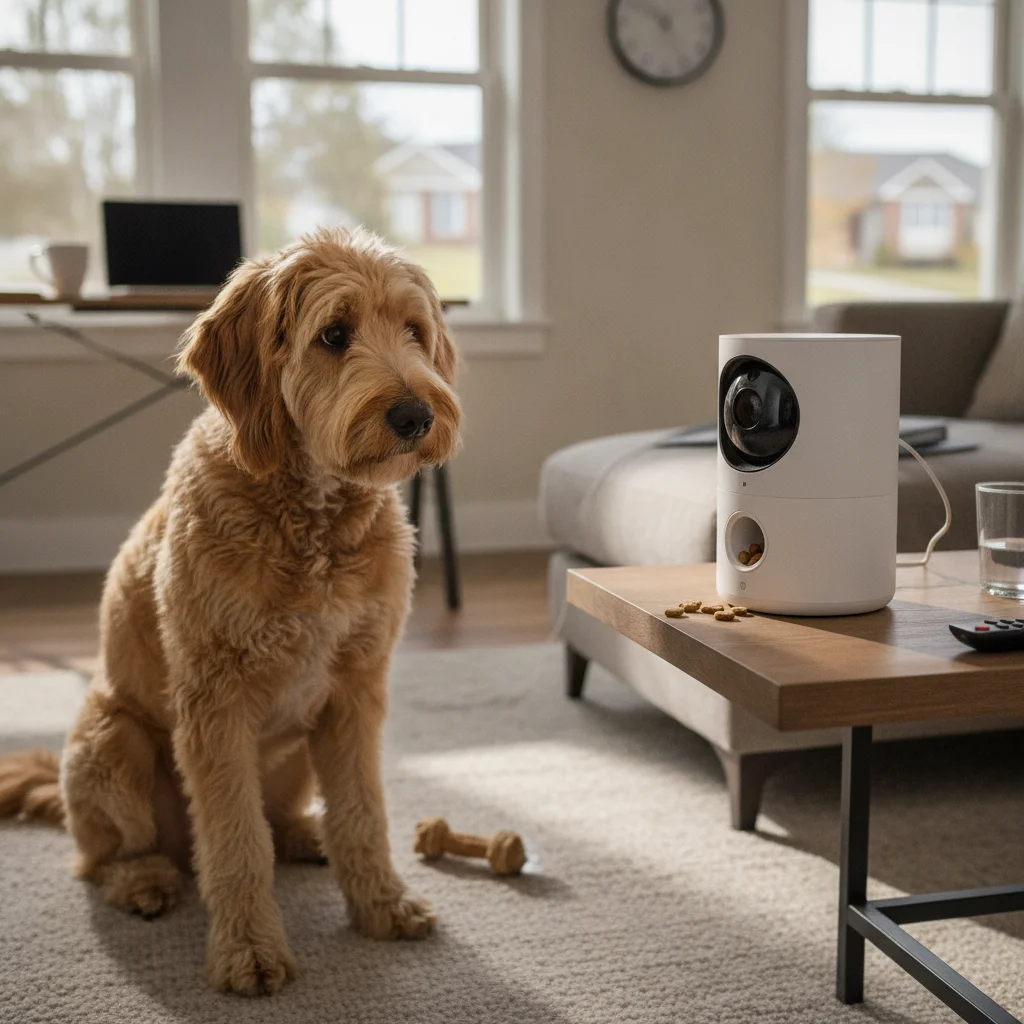
Generic “best pet camera” lists reward crisp video and cute app stickers. Anxiety shopping needs different winners. In this guide, the best dog camera for separation anxiety is the one that helps you:
- See the dog within a few seconds of an alert
- Toss a treat that actually lands where the dog can find it
- Avoid notification spam that trains you to mute everything by Friday
- Support a training plan instead of accidentally rewarding panic barking
We also weighted privacy basics and long-term dispenser reliability, because an anxious dog’s camera becomes an always-on fixture. If the treat chute gums up in month four, the “training tool” becomes shelf clutter.
Severity matters. Mild alone-time whining is a different problem than destruction, house soiling, or self-injury. Cameras are useful data tools for all levels, but only mild-to-moderate cases saw behavior change from remote treats alone in our homes.
How We Tested Anxious Dogs (Not Just Video Quality)
We ran weekday alone sessions with dogs that already showed vocal or pacing distress when owners left. We logged:
- Time-to-first-bark after departure
- Whether a remote treat interrupted the loop
- Owner response time from notification to live view
- Failed tosses and jammed dispensers
- Whether owners still used the camera after week six
That last metric mattered more than we expected. The best dog camera for separation anxiety is worthless if you stop opening the app. Heavy, noisy alert systems got muted. Calmer apps stayed in the weekday routine.
We are not veterinary behaviorists. Nothing here replaces a diagnosis or a structured desensitization plan. Think of this as product testing inside a real constraint: anxious dogs, real Wi-Fi, and owners who still have to commute.
No treat camera cures separation anxiety alone — cameras help interrupt mild distress loops, not replace training and gradual departures.
Camera Comparison: Furbo, Petcube, and Enabot
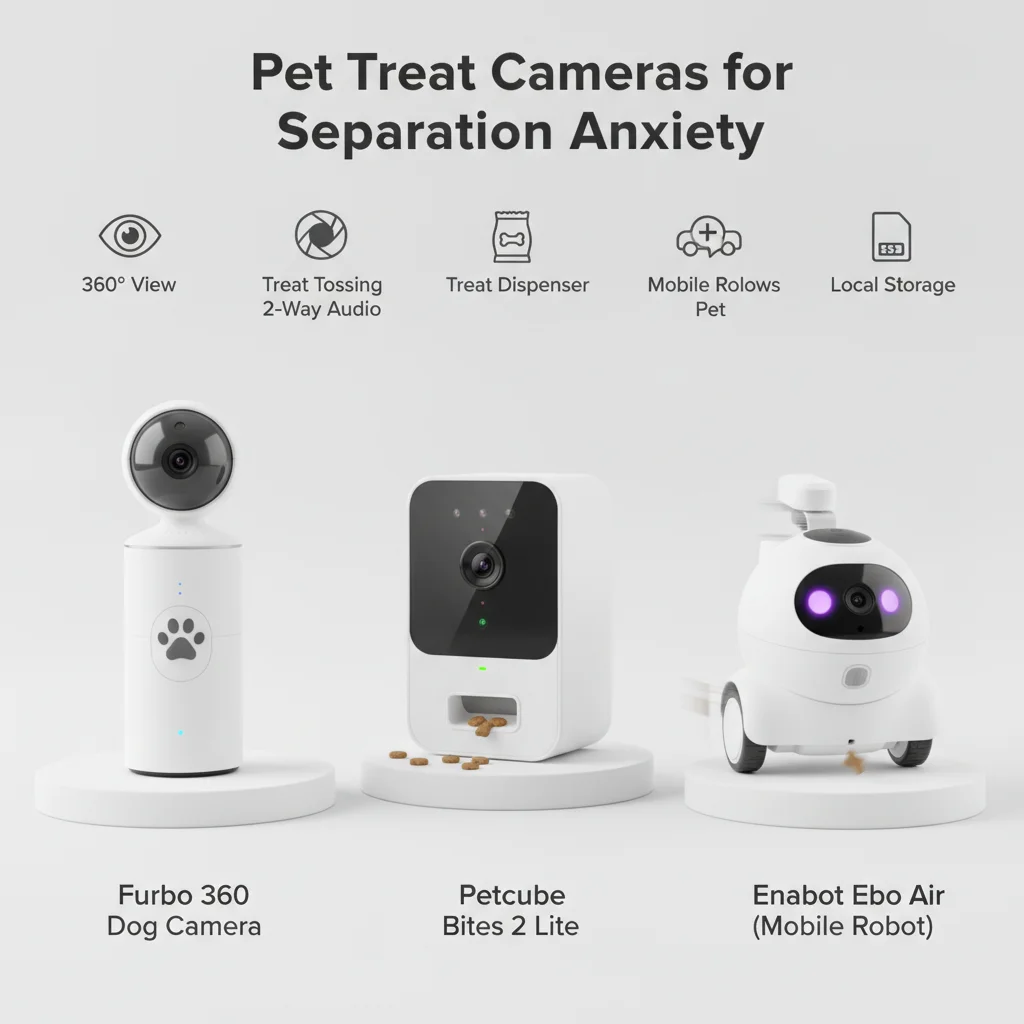
| Model | Anxiety fit | Treat reliability | Alert style | Best for |
|---|---|---|---|---|
| Petcube Bites 2 | Excellent | Very good | Calmer | Most single-dog homes |
| Furbo 360 | Excellent | Best | Aggressive | Training tosses + bark capture |
| Enabot EBO SE | Good | Good | Basic | Large rooms needing rotation |
Petcube won everyday usability. Opening the app, finding the dog, and tossing a treat felt fastest — critical when you have ninety seconds between meetings. Furbo won mechanical consistency. Soft treats jammed Petcube more often unless we followed size guidance carefully. Enabot’s rotation helped in open floor plans, but treat accuracy lagged when we needed precise interruptions.
Night vision ranking in a dark hallway: Furbo first, Petcube close, Enabot acceptable. If your anxiety spikes happen after sunset returns from late shifts, Furbo’s clearer low-light image helps you judge panic versus normal resettling.
Subscription pressure is real. Buy only if live view and manual treats work without paying forever. Cloud clip history is helpful for reviewing a bad Tuesday, not a requirement for weekday triage. That rule alone prevents most regret purchases labeled as the best dog camera for separation anxiety.
For durability beyond the honeymoon month, read our Litter-Robot 5 vs Petkit vs Neakasa durability scores before paying the premium.
Protocols That Actually Reduced Barking
Hardware without a protocol underperformed. The sessions that improved looked like this:
- Pre-departure calm: camera already on, dog on a known mat, one low-key treat before leaving
- Early interrupt, not late bribe: toss during the first restless vocalizations, not after a ten-minute spiral
- Reward quiet check-ins: speak briefly, toss once, end the call — do not hold a long FaceTime that teaches clinginess
- Mute overnight packs: thunderstorm false positives trained owners to disable alerts entirely
What made anxiety worse: tossing a treat for every bark. Dogs learned that volume summons snacks. If you use the best dog camera for separation anxiety as a panic button, you can accidentally shape louder behavior.
Pair the camera with boring departures, short absence practice, and enrichment that is not only food toys if food raises arousal. When destruction or self-harm is present, stop DIY treat experiments and get professional help.
Two-dog homes need extra caution. Treat cameras can create competition. We had better results waiting until both dogs were visible and relatively settled. Enabot’s pan helped find the second dog; Furbo still tossed more reliably once we had the angle.
Who Should Buy Which Camera
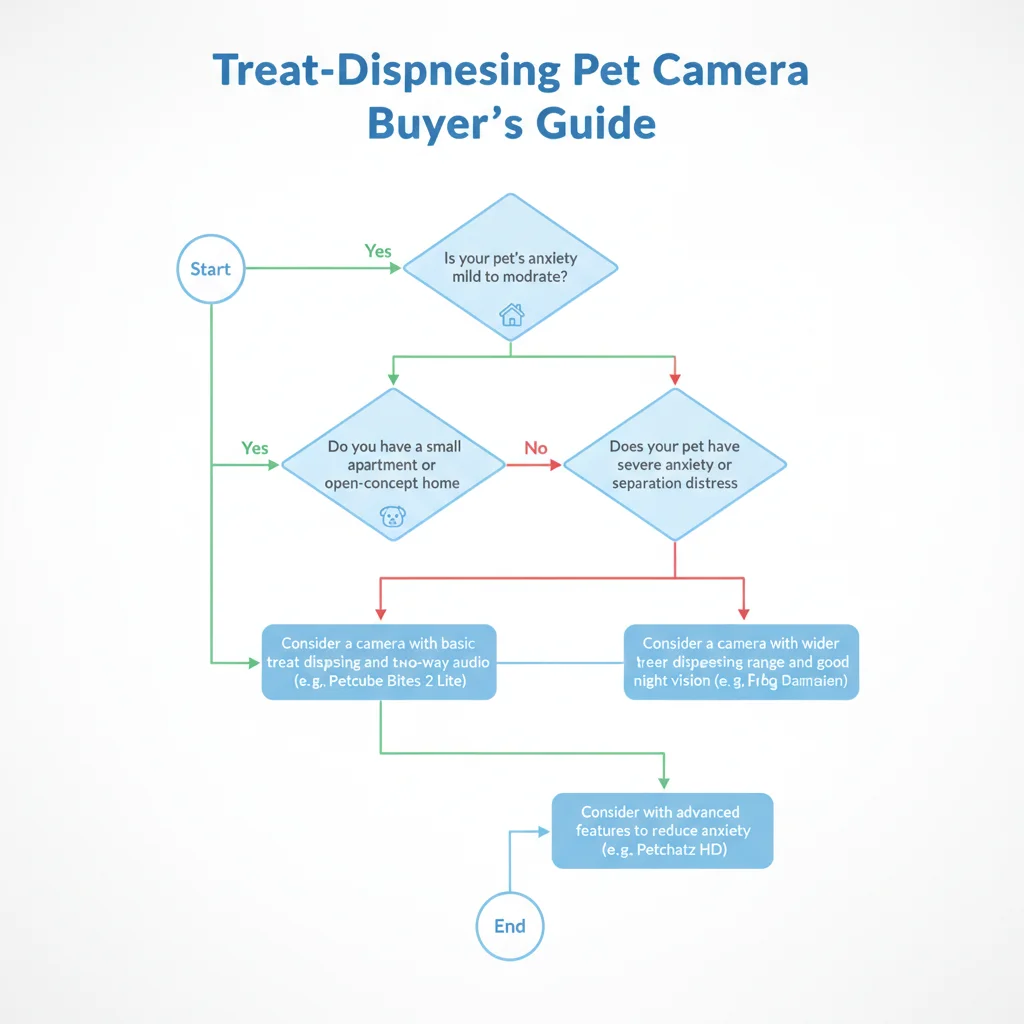
- Most people seeking the best dog camera for separation anxiety: Petcube Bites 2.
- Owners who train with remote treats daily: Furbo 360.
- Large open layouts on a budget: Enabot for coverage, knowing treats are secondary.
- Severe clinical anxiety: buy a camera for monitoring data, then fund training — not the other way around.
Placement tips that changed outcomes more than brand loyalty:
- Mount so the treat arc lands in an open zone, not behind furniture legs
- Prefer the dog’s settle spot over the front door peephole angle
- Keep treats dry; humidity creates paste in chutes
- Use unique passwords and updated firmware — this is a living-room internet device
If privacy worries you as much as barking, read our companion notes on camera risk hygiene alongside the product pick. An always-watching lens is a trade you should make consciously.
Final Recommendation for 2026
For most shoppers, Petcube Bites 2 is the best dog camera for separation anxiety because owners keep using it. Furbo 360 is the specialist when treat reliability and bark capture are the job. Enabot is a coverage tool, not the anxiety default.
Buy the camera as one layer: monitoring, occasional interruption, and homework accountability for a real training plan. Do not expect a $200 gadget to replace gradual alone-time work.
Next steps: compare hardware in our our long-term product testing method, check Furbo longevity in the Litter-Robot 5 vs Petkit vs Neakasa durability scores, and read whether treats moved bark metrics in our how we score real-home durability.
Frequently Asked Questions
Can a pet camera cure dog separation anxiety?
No. Cameras and treats can interrupt mild distress and help you gather data, but moderate-to-severe separation anxiety needs a behavior plan, and sometimes a veterinary behaviorist.
What is the best dog camera for separation anxiety in 2026?
Petcube Bites 2 is the best default for most single-dog homes. Choose Furbo 360 if you need the most consistent treat tosses and aggressive bark alerts.
Do treat tosses make anxiety worse?
They can if you reward frantic barking every time. Use treats for calm check-ins and planned training reps, not as a panic button for every vocalization.
Is a subscription required for separation anxiety use?
Not for core live view and manual treats on the cameras we tested. Cloud history helps review episodes, but do not buy a camera that cannot toss without a paid plan.
Where should I place a camera for an anxious dog?
Where the dog already settles — often a crate zone or favorite mat — with a clear treat landing area and strong Wi-Fi. Avoid aiming only at the front door if that increases vigilance.
Related reading on our sister sites: Best Elevated Dog Bowls 2026: