What multi-dog homes actually need from a pet camera
Shopping for the best pet camera for multiple dogs is not the same as buying for a single couch potato. Pack dynamics change everything: field of view, treat fairness, alert noise, and whether one device can cover the room where dogs actually hang out—not the room you wish they used.
We tested treat-dispensing cameras in three households: two medium dogs in an open living-dining combo, three small dogs in a ranch layout, and two large breeds with a split kitchen-living sightline. Each home ran the same two-week script: weekday work-hour monitoring, manual treat launches during training windows, and bark-alert tuning sessions.
Single-dog reviews obsess over app polish. Multi-dog reality obsesses over coverage arcs and whether the bolder dog hogs every launch. A camera that looks brilliant in a 12-foot room fails when one dog camps behind a sofa and another guards the front window. Start with your floor plan, not the brand logo.
For brand-level comparisons before you buy, read our Furbo 360 vs Petcube vs Enabot showdown. This guide assumes you already want toss mechanics—not a bare security cam.
- Coverage: can one lens see all dog zones without constant repositioning?
- Treat fairness: can you aim launches and train waiting without fights?
- Alerts: can bark detection survive three dogs playing without spamming?
- Throughput: can the hopper and motor handle multiple daily launches?
If only one dog has separation anxiety, prioritize that dog’s zone first. A second camera later often beats one premium unit trying to cover two rooms through a doorway gap.
Field of view and placement for two or three dogs
Static wide-angle cameras work when dogs share one main zone—a rug, a couch, a kitchen peninsula. They fail when the pack splits. A 130-degree lens cannot see behind a sectional and down a hallway at the same time without ugly distortion at the edges.
Rotating heads—Furbo 360, Enabot EBO—earned their keep in the open living-dining test. One tap spun the view from the front door mat to the dog bed without moving the unit. That mattered when the anxious dog paced the entry while the confident dog camped on the couch.
Placement rules that actually held
Center the camera on the longest unobstructed wall when possible. Dog-eye height beats ceiling mounts for treat arcs—you need the toss lane clear. Keep the unit off narrow shelves where a jumping dog can knock it. Leave six inches of clearance above the treat chute so launches do not ricochet into a cabinet lip.
Wi-Fi stability beat spec sheets. Mesh nodes one room away prevented the stutter that makes dogs stare at a frozen frame while you mash launch. If your pack lives on the far side of a brick wall from the router, fix networking before you buy a fancier camera.
Smaller rooms under 15 feet wide often suffice with a fixed wide lens like Petcube Bites 2. Save rotation money unless dogs routinely use opposite corners. See separation-anxiety placement tips in our best pet camera for anxious dogs guide for single-zone setups that still help multi-dog homes with one primary dog.
Treat launching fairness under multi-dog stress
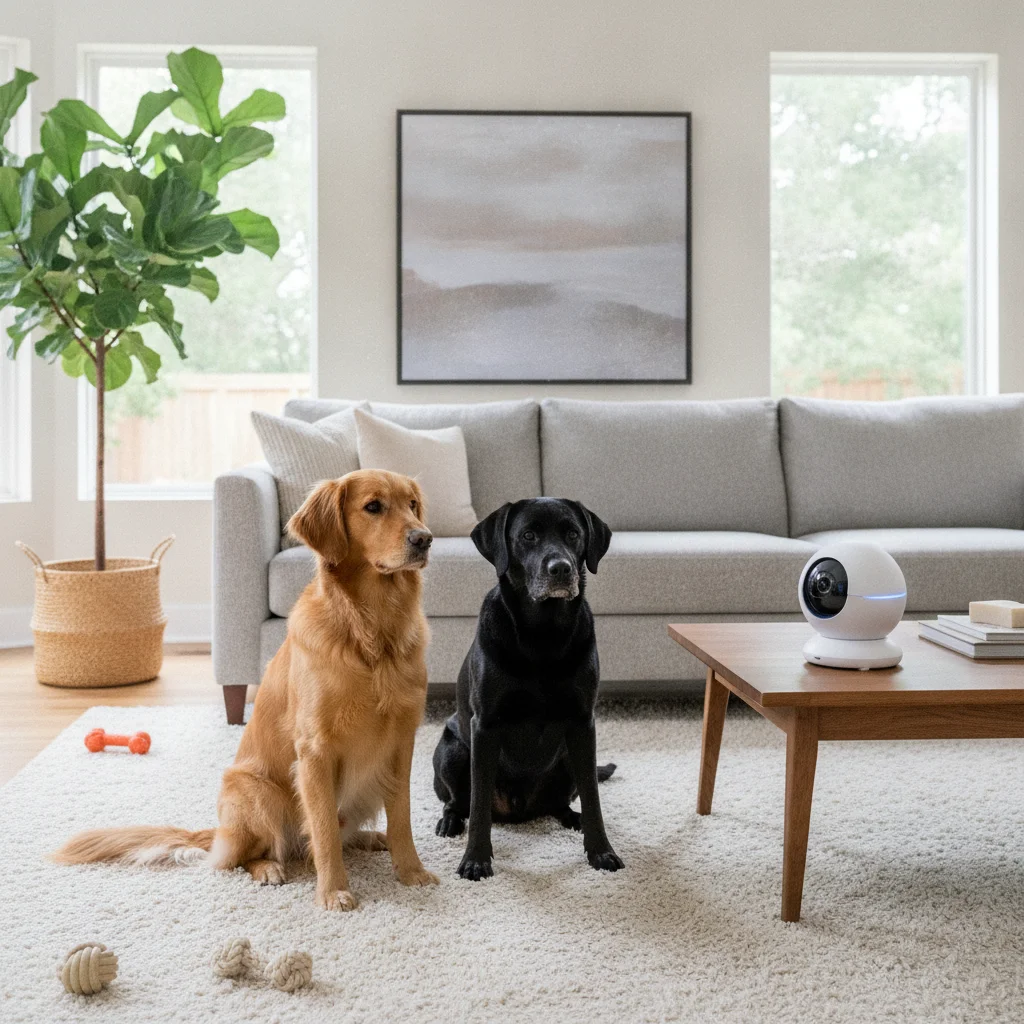
Treat cameras turn polite pairs into linebackers if you skip training. The hardware can launch fast enough for two dogs when treats are sized right and the hopper is not overfilled. Double feeds—two treats for one tap—triggered more fights than single launches ever solved.
Our fairness protocol: two labeled mats four feet apart, launch to the dog on the “wait” mat first, release the second dog on a verbal cue. Rotating cameras helped aim to the correct mat without moving the unit. Fixed cameras required tighter mat placement directly in frame.
Motor cadence and hopper limits
| Household | Daily launches | Jam risk | Training note |
|---|---|---|---|
| 2 medium dogs | 6–10 | Low with cleaning | Alternate first dog |
| 3 small dogs | 8–12 | Medium if oily treats | Name each dog |
| 2 large dogs | 4–8 | Higher hopper wear | Use medium treats only |
Size-matched treats matter. Large biscuits bridge chutes; jerky oils gunk faster with multiple launches. Medium training treats kept motors happiest across brands. Budget biweekly hopper cleans if you run a true multi-dog training day.
Never launch into a tight crowd to “break up” scuffles—you will teach collision equals reward. Launch only when paws are on assigned mats and mouths are off each other’s collars.
App controls, alerts, and daily reliability
Multi-dog homes need alert tuning more than single-dog homes. Three dogs wrestling looks like a bark festival to naive algorithms. Lower sensitivity, zone alerts if available, and disable push during known play hours after you verify video.
Multi-user access helped when one partner commutes and another works from home. Shared accounts with separate notification schedules prevented duplicate launches that overfed the bold dog. Some apps still lack per-user launch permissions—check before you assume.
Clip history mattered when neighbors complained about noise. Being able to pull a 30-second bark clip without scrubbing a ten-minute timeline saved relationships in the apartment two-dog test. Subscription tiers that gate clips hurt multi-dog owners more because dispute evidence is often clip-shaped.
Daily reliability checks: spin rotation if applicable, single test launch before work, verify night vision on the far mat. Two minutes each morning beats discovering a jam at lunch when all three dogs are already stressed.
Our top picks and setup checklist
Best rotating pick for large rooms: Enabot EBO or Furbo 360 when dogs use opposite ends of an open plan. Rotation beat repositioning in our three-home test. Furbo’s app felt smoother for bark clips; Enabot’s head rotation was slightly faster in the ranch home.
Best fixed wide pick for smaller zones: Petcube Bites 2 when both dogs share one rug and the room is under 15 feet wide. Save money unless you know you will remodel into an open plan soon.
Skip treat tossers if your pack already resource-guards food—fix guarding with a trainer before you automate treats from the sky. A camera-only stream plus floor puzzles may be safer.
Pre-buy checklist
- Map dog zones on paper; mark zones the camera must see simultaneously.
- Measure Wi-Fi at the mount point with a phone speed test.
- Buy medium treats and test chute fit before committing to a brand.
- Plan mat positions and “wait” training for each dog.
- Budget cleaning time weekly if launches exceed six per day.
The best pet camera for multiple dogs is the one that covers your real floor plan, survives your launch volume, and fits your training skill—not the one with the prettiest lifestyle ad. Buy rotation for spread-out packs, buy fixed wide for shared zones, and buy a second simple cam if your dogs live in two rooms.
FAQ
Can one pet camera work for three dogs?
Yes if field of view covers the main room and you train treat fairness; rotating models help when dogs spread across a large space.
Which pet camera has the widest view for multiple dogs?
Rotating heads like Enabot EBO and Furbo 360 beat fixed lenses in open living rooms; place them centrally for best coverage.
How do you stop treat fights with two dogs?
Use separate mats, launch to the calmer dog first, and avoid overfilling hoppers that cause double feeds.
Is Furbo or Petcube better for multi-dog homes?
Furbo 360 and Enabot rotate for coverage; Petcube Bites 2 works in smaller rooms where a wide static angle suffices.
Where should you mount a camera for multiple dogs?
Center on the longest wall at dog-eye height, clear of shelves that block treats, with power and Wi-Fi stability.
Related reading on our sister sites: Best Cat Water Fountains for