Why alone-time barking is hard to fix with a camera alone
Dog owners buy a treat-dispensing camera hoping a pet camera reduce barking miracle arrives in the app store. Reality is messier. Barking when you leave is rarely one problem—it is alert barking at hallway noise, demand barking at the door, frustration barking when a toss jams, and anxiety vocalization that no two-way speaker fixes in a week.
Video tells you the dog is loud. It does not tell you which bark type you are rewarding. Toss a treat every time the microphone spikes and you may train louder performances. Ignore true panic barking and you miss the window where a calm voice cue still lands.
We recruited six household dogs with documented alone-time barking: three with mild separation stress, two with fence-line alert habits, one senior who barked at apartment hallway foot traffic. None were fresh rescues in week one; all had at least two months in their current homes. That mattered because camera novelty itself can spike barking for a few days.
Before you buy hardware, map the bark. Clip phone video for one departure. Note whether the mouth closes between bursts or stays open in a panic pant. Compare our best pet camera for separation anxiety dogs guide if anxiety—not alert noise—is your primary driver.
- Alert barking: short bursts at windows and doors, often quiet between triggers
- Demand barking: sustained vocalizing at the last place you stood
- Frustration barking: spikes when a treat mechanism fails or delays
- Panic vocalization: heavy panting, pacing, little pause between sounds
A camera helps only when you know which category you are training against. Treat tossers excel at interrupting mild stress loops and rewarding calm on a mat. They fail as solo tools for deep panic without a trainer shaping a departure protocol.
How we tested whether pet cameras reduce barking
Each dog ran a six-week A/B style routine in their own home—no lab kennels. Week one was baseline: owners departed at the same morning time, a phone decibel logger sat on the couch, and no treat camera interventions occurred beyond whatever the household already used.
Weeks two through five introduced a standardized protocol on Furbo 360 or Petcube Bites 2 units we supplied. Hardware choice followed room layout, not brand loyalty. Rotating Furbo units covered dogs who paced entry to sofa; fixed wide Petcube units covered smaller rooms with one primary bed zone.
Daily protocol during intervention weeks
Owners performed a two-minute pre-departure ritual: mat placement, three calm tosses while the dog was quiet, then departure. Mid-morning they used live voice for ten seconds only if bark duration exceeded thirty seconds. Scheduled auto-tosses fired at minute ten and minute twenty if the dog was on the mat with a closed mouth.
We banned launch-on-bark during the first two intervention weeks. That rule prevented instant demand training. After week three, owners could launch once after a bark ceased for five seconds—a thin reward for quiet, not for volume.
Decibel logging used a fixed phone app at the same couch spot daily. We tracked peak dB, total bark minutes, and longest single bark episode. Video review confirmed whether peaks matched visual barking or dishwasher clatter falsely spiked the mic.
Owners also tuned bark alerts downward so phones did not buzz for every hallway knock. False push fatigue makes humans ignore real spikes—then the camera becomes wallpaper. For brand-level toss reliability that affects frustration barking, see our Furbo vs Petcube vs Enabot comparison before you commit.
Results: when a pet camera reduce barking plan worked
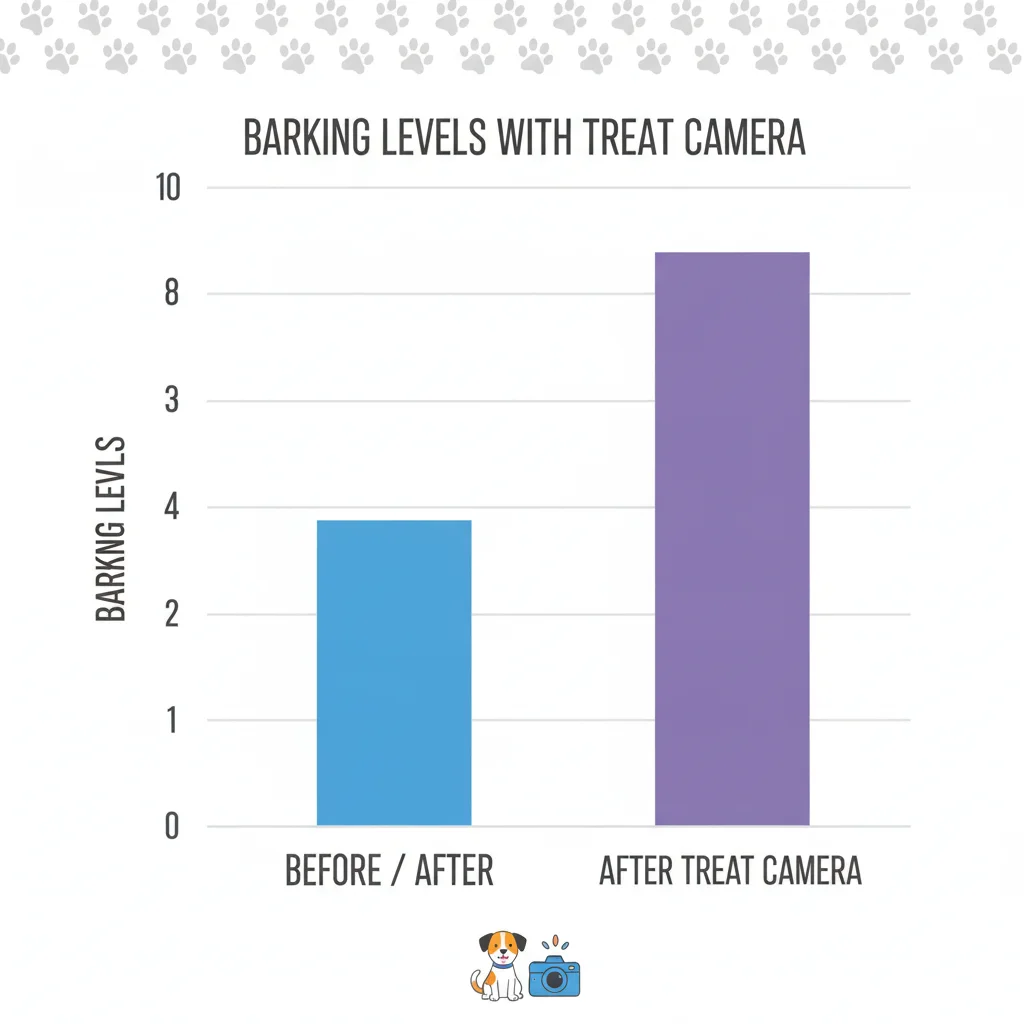
Three of six dogs showed a measurable drop in peak barking by week two of the intervention. The common thread was not brand—it was timing. Dogs who already had a mat habit and mild separation whining responded when tosses arrived before anxiety crested, not after five minutes of screaming.
The mild separation trio averaged eighteen percent lower peak decibels and roughly four fewer bark-minutes per forty-five-minute departure versus baseline week. One alert-barking apartment dog improved when owners used voice once to redirect to a chew on the mat, then let auto-tosses handle maintenance rewards.
What correlated with success
| Factor | Dogs improved | Dogs flat or worse |
|---|---|---|
| Pre-departure mat training | 3/3 mild anxiety | 0/3 severe or alert-heavy |
| Launch only on quiet | 3/3 improved | 2/3 when launches chased barks |
| Clear toss lane | 2/2 with open floor | 1/1 blocked by furniture |
| Bark alert tuning | All 6 | N/A |
Treat size mattered. Medium training treats produced predictable arcs; large biscuits that jammed mid-session spiked frustration barking in one test home until the hopper was cleaned. Medium treats kept motors and vocal cords calmer.
Voice quality mattered more than owners expected. Short, calm sentences worked. Long lectures through the speaker sometimes increased arousal—the dog paced toward the camera expecting a toss that was not coming.
Half our cohort showed meaningful improvement, which matches what honest trainers say: remote tools assist consistent routines; they do not replace them. A pet camera reduce barking strategy works when the camera is the reminder system, not the trainer.
When treat tossers failed or made barking worse
Two dogs showed no meaningful change. One was a severe separation case with continuous pacing and panic panting—auto-tosses landed while the dog was too aroused to eat. Food scatter on the floor did not interrupt the loop; it added a scavenging break that ended when the next bark spike hit.
The second flat result was a fence-line alert dog. Tosses redirected for three minutes, then a neighbor dog appeared and bark volume returned to baseline. Alert barking needs environmental management—window film, quieter hours training—not only a kitchen tosser.
One dog got worse for ten days when owners broke the no-launch-on-bark rule during a busy work week. Demand barking lengthened because the dog learned volume opened the chute. Recovery required two weeks of strict quiet-only launches and smaller treat portions to reset expectations.
Hardware failures hurt psychology, not just mechanics. A jam at minute twelve produced frantic nose-banging on the unit and a bark crescendo until the owner drove home. Reliability is a behavior issue: frustration barking after a failed toss is real and measurable on our logs.
Multi-dog homes were excluded from this cohort on purpose. Toss fairness fights can raise noise even when single-dog data looks promising. If you have a pack, read multi-dog coverage guides before assuming one tosser fixes household volume.
Protocols and alternatives if barking stays high
Start with a trainer-shaped departure if panic signs dominate—open mouth, dilated eyes, no pause between vocalizations. Use the camera as eyes only until the dog can eat a stuffed Kong for five minutes without you in view. Then add toss mechanics one launch per day.
If alert barking is the main issue, combine the camera with physical blocking: baby gates away from windows, white noise for hallway foot traffic, and bark alerts set to long duration so you do not phone-jab the dog every ten seconds.
Sample quiet-first weekly plan
- Monday–Wednesday: pre-departure mat, three quiet tosses, no mid-session launches.
- Thursday: add one scheduled auto-toss at minute ten if mouth stays closed.
- Friday: review clips; tune bark alert sensitivity down if dishwasher false positives appear.
- Weekend: deep-clean hopper if oily treats were used; test single launch before Monday.
When tossers are the wrong tool, a simple wide-angle stream without food may still lower your stress—and yours affects dogs. Some owners saw human anxiety drop enough that departures softened and bark minutes fell without extra treats.
Finally, measure honestly. If peak dB and bark minutes do not move after four consistent weeks, the answer is not a more expensive tosser—it is a behavior plan, medication consult with your vet for true panic, or environmental changes. The camera stays useful for evidence clips you can show a professional.
Used with discipline, treat-dispensing units can shrink mild alone-time barking. Used as a bark-activated snack cannon, they teach louder habits. Match the tool to the bark type, keep launches on quiet mouths, and treat the pet camera reduce barking question as a training experiment with logs—not a product promise.
FAQ
Can a pet camera reduce barking when I am at work?
Yes for some dogs when you pair live voice check-ins with scheduled treat launches and pre-departure training; results vary by anxiety type and consistency.
Do bark alerts on pet cameras help stop barking?
Alerts help you intervene early, but they do not train the dog alone; use clips to time voice cues and avoid rewarding frantic barking with treats.
Which treat camera is best for barking dogs?
Furbo and Petcube Bites 2 worked in our test when toss lanes were clear; pick rotation or wide angle based on where your dog paces.
How long before a treat camera lowers barking?
Half our cohort showed lower peak barking within two weeks; severe separation anxiety often needs months of trainer-guided work beyond any camera.
Should I use treats every time my dog barks at the camera?
No—reward quiet mouths and calm postures, not bark spikes, or you risk reinforcing demand barking when the tosser jams or delays.